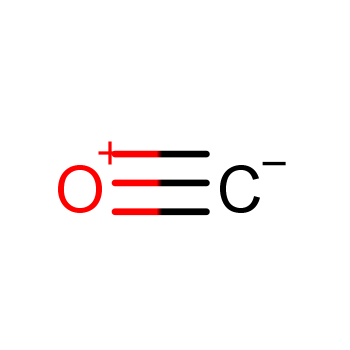
Welcome to the fascinating world of molecular structures! Today, let's delve into the Lewis structure of carbon monoxide (CO), a compound with significant implications in chemistry and industry. Understanding the Lewis structure of CO provides insights into its bonding, geometry, and properties.
What is the Lewis Structures?
Lewis structures, devised by Gilbert N. Lewis, are diagrams that represent the valence electrons of atoms within a molecule. By using dots to represent valence electrons and lines to represent covalent bonds, Lewis structures help predict molecular shape and behavior based on the octet rule, which states that atoms tend to achieve stability by having eight electrons in their outermost shell.
What is Carbon Monoxide?
Carbon monoxide (CO) is a colorless, odorless gas composed of one carbon atom bonded to one oxygen atom. It is a highly toxic gas that is produced by incomplete combustion of carbon-containing compounds. Despite its toxicity, CO plays a crucial role in various industrial processes, including the production of chemicals and as a fuel in combustion engines.
How to draw Lewis structures for Carbon Monoxide (CO)?
Let's explore how to draw the Lewis structure of CO:
Step 1: Identify the Central Atom: In CO, carbon is the central atom because it is less electronegative than oxygen.
Step 2: Calculate Total Valence Electrons: Carbon contributes 4 valence electrons, and oxygen contributes 6, giving a total of 4 + 6 = 10 valence electrons.
Step 3: Arrange Electrons Around Atoms: Connect carbon and oxygen with a double bond (two lines) to share four electrons. This leaves six electrons to be placed as lone pairs around the oxygen atom.
Step 4: Fulfill the Octet Rule: Both carbon and oxygen now have eight electrons around them, satisfying the octet rule.
Step 5: Check for Formal Charges: The formal charges are not necessary as both atoms have achieved the octet rule without any charge.

Molecular geometry of Carbon Monoxide (CO)
The Lewis structure suggests that CO has a linear geometry. The carbon atom is positioned centrally with the oxygen atom on one side, forming a straight line. This arrangement minimizes electron repulsion, resulting in a stable molecular structure.

Hybridization in Carbon Monoxide
In CO, the carbon atom undergoes sp hybridization. One s orbital and one p orbital combine to form two sp hybrid orbitals. These orbitals then overlap with the 2p orbital of the oxygen atom to form a strong σ bond between carbon and oxygen.
Carbon monoxide (CO) is a polar molecule. Although the carbon-oxygen bond is polar due to the difference in electronegativity between carbon and oxygen, the linear molecular geometry of CO ensures that the dipole moments of the two bonds cancel each other out, resulting in a nonpolar overall molecule.
What are approximate bond angles and Bond length in Carbon Monoxide?
The bond angle in CO is approximately 180 degrees due to its linear geometry. The bond length between carbon and oxygen in CO is approximately 112.8 picometers (pm).
Note: While theoretical calculations predict ideal bond angles and lengths, real molecules may deviate slightly due to various factors such as lone pair repulsion and bond polarity.
Highlight of Carbon Monoxide
| CARBON MONOXIDE Cas 630-08-0 |
| Molecular formula |
CO |
| Molecular shape |
Linear |
| Polarity |
polar |
| Hybridization |
sp hybridization |
| Bond Angle |
- |
| Bond length |
112.8 pm |







 EN
EN
 Agricultural News
 Food News
 Industrial News
 Cosmetic News
 Pharmaceutical News
 Science News