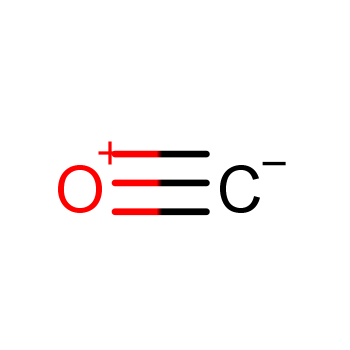
What is CO?
Carbon monoxide, with a chemical formula of CO, is a colorless, odorless, and tasteless gas. It is produced by the incomplete combustion of carbon-containing fuels such as wood, gasoline, and natural gas. Carbon monoxide is highly toxic and can be lethal when inhaled in high concentrations. It has a higher affinity for hemoglobin than oxygen, leading to carbon monoxide poisoning, which can result in tissue damage and death. Despite its dangers, carbon monoxide has several industrial applications and is also produced naturally in small quantities through biological processes.
What is Polarity?
Polarity refers to the distribution of electrical charge within a molecule. In chemistry, the polarity of a molecule arises from differences in electronegativity between its constituent atoms. Electronegativity is the tendency of an atom to attract electrons towards itself in a chemical bond. When atoms with different electronegativities form a bond, the shared electron pair is pulled closer to the more electronegative atom, resulting in a separation of charge known as a dipole moment. This creates regions of partial positive and negative charges within the molecule, making it polar.
The polarity of a molecule affects its physical and chemical properties, including solubility, boiling point, and reactivity. Polar molecules tend to dissolve in polar solvents due to the attraction between opposite charges, while nonpolar molecules dissolve in nonpolar solvents. Additionally, polar molecules may exhibit stronger intermolecular forces, influencing their boiling points and melting points compared to nonpolar molecules.
Polarity of CO
Carbon monoxide is a polar molecule despite its linear structure. Why is CO polar?
(1) Dipole Moment
In the carbon monoxide molecule, the oxygen atom is significantly more electronegative than the carbon atom. This results in a polar covalent bond, with oxygen pulling the shared electrons closer to itself, acquiring a partial negative charge, and leaving carbon with a partial positive charge. As a result, carbon monoxide possesses a net dipole moment, with the oxygen end being negative and the carbon end being positive.
(2) Electronegativity
The electronegativity difference between carbon and oxygen in carbon monoxide leads to the molecule's polarity. Oxygen's higher electronegativity causes it to attract electrons more strongly, resulting in the uneven distribution of electron density in the CO molecule.
Therefore, carbon monoxide (CO) exhibits polarity.
Applications of CO Polarity
Carbon monoxide has various industrial applications, including its use as a precursor in the production of chemicals such as acetic acid, methanol, and formaldehyde. It is also employed in the synthesis of metal carbonyl complexes used as catalysts in organic reactions. Additionally, carbon monoxide is utilized in the purification of nickel and other metals and as a reducing agent in metallurgical processes. In the automotive industry, carbon monoxide is a byproduct of incomplete combustion in internal combustion engines and is regulated to reduce air pollution.
Highlight of Carbon Monoxide
| Carbon Monoxide (CO) |
| Chemical Formula |
CO |
| Molecular Shape |
Linear |
| Relative Molecular Mass |
28.01 g/mol |
| Solubility |
Slightly soluble in water |
| Melting Point |
-205.05 °C |
| Boiling Point |
-191.5 °C |







 EN
EN
 Agricultural News
 Food News
 Industrial News
 Cosmetic News
 Pharmaceutical News
 Science News