-
We detected your language preference as English. Would you like to switch to the English version for a better experience?
Switch to English
Stay here



Pfizer has announced that its RSV vaccine demonstrates 90% efficacy in preventing the most severe outcomes during the first RSV vaccination season. This highlights its potential benefits as another respiratory virus season begins. New data, presented Thursday at IDWeek, provides a clearer picture of how Abrysvo performs in preventing severe illness and hospitalization. These results come from Kaiser Permanente in Southern California, although the trial was funded by Pfizer and includes co-authors from the company.
The retrospective study looked at patients aged 60 and over who were hospitalized or visited the emergency room for severe acute respiratory illness. Among this group, the vaccine showed a 90% efficacy in preventing the most severe respiratory cases, with only one positive case reported among patients vaccinated with Abrysvo. However, the confidence interval was wide, ranging from 24% to 99% in the preliminary analysis. While these results are not significantly different from Pfizer's previous trials, this study marks the first review of immunocompromised individuals, who were excluded from the Phase 3 trials.
Despite the introduction of the RSV vaccine, the hospitalization rate for RSV-related cases among people aged 65 and older last fall and winter was the highest recorded in the past seven years.
According to CDC data, the hospitalization rate for this age group peaked at 9.4 per 100,000 people in the last week of December 2023. The second-highest peak over the past seven years was during the 2022-2023 season, with 6.1 hospitalizations per 100,000 people, as COVID-19 precautions waned, and the incidence of other respiratory diseases surged.
In response to these trends, public health officials changed their RSV vaccination strategy over the summer. They shifted from advising that anyone 60 and older consult a healthcare provider before getting vaccinated to directly recommending that individuals in the same age group who are at high risk of severe disease should receive the vaccine. CDC advisors further mandated that anyone aged 75 and older should be vaccinated. In the first season, around one-quarter of people aged 60 and over received the vaccine.
However, since previous guidelines technically included anyone aged 60 and older, investors and analysts expected the new guidelines to potentially narrow the market. Nonetheless, clinicians and pharmacists believe that the new guidelines will be easier to implement, allowing them to more confidently recommend vaccination to those most in need. Jefferies' latest data, assessed in early October, found that vaccine prescriptions had dropped by 40% compared to the same period in 2023. However, there are also promising signs, as both GSK and Pfizer saw double-digit prescription growth in the last week of September compared to the previous week. According to Jefferies, Moderna’s RSV vaccine, mRESVIA, is also seeing weekly growth in prescriptions, although this growth is "incremental."
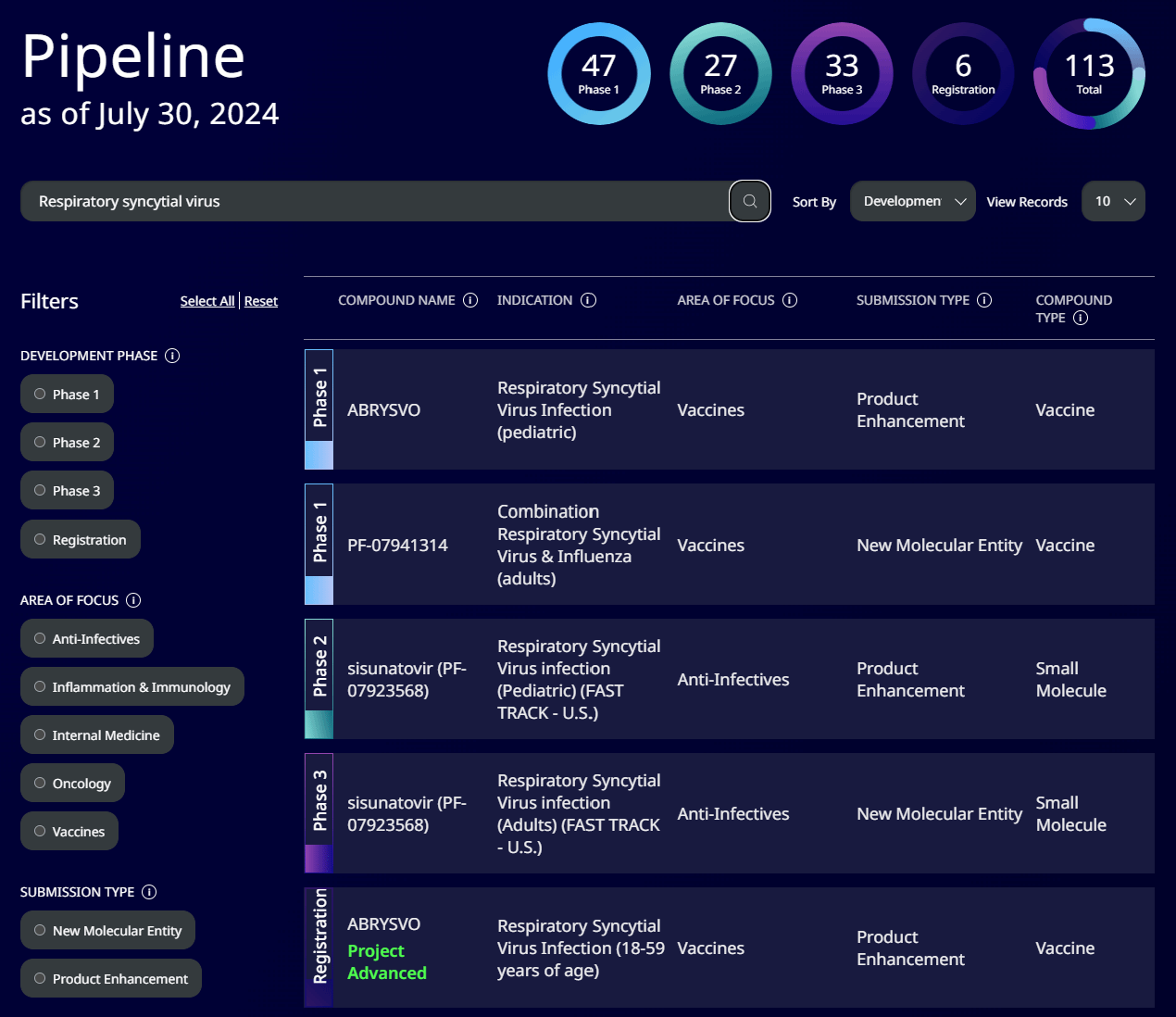
According to Pfizer's latest R&D pipeline update as of July 30, 2024, Pfizer currently has only one early-stage RSV and flu combination vaccine, PF-07941314, in the RSV treatment area. RSV remains a key investment area for Pfizer, particularly in its RSV vaccine products.
In May 2023, Pfizer’s RSV vaccine ABRYSVO received FDA approval for preventing RSV in pregnant women, infants, and adults aged 60 and older, with strong market performance. In 2023, ABRYSVO achieved $890 million in sales, making it Pfizer’s sixth best-selling product. In just seven months post-approval, ABRYSVO's sales neared $1 billion, showcasing its strong market potential and the public’s demand for effective RSV prevention.
However, the previously promising Abrysvo vaccine saw revenue drop to only $200 million in the first half of 2024, a sharp decrease compared to $890 million in its first year. This decline followed the U.S. CDC's recent recommendation to narrow the vaccination range to all individuals aged 75 and older and high-risk individuals aged 60 and above, significantly reducing the eligible population. Despite these limitations, Pfizer has submitted a supplemental application to expand eligibility to individuals aged 18-59.
 EN
EN
 Agricultural News
 Food News
 Industrial News
 Cosmetic News
 Pharmaceutical News
 Science News
