-
We detected your language preference as English. Would you like to switch to the English version for a better experience?
Switch to English
Stay here




"Bad" news keeps coming, and it is coming from two major regulatory agencies in the US and Europe, the FDA and EMA.
However, looking back at the development of obeticholic acid, it hasn't exactly been smooth. Since its approval in 2016 for the treatment of primary biliary cholangitis (PBC), Intercept Pharmaceuticals has made two unsuccessful attempts to expand the drug’s use to MASH. This led Intercept to completely abandon the MASH project and lay off a third of its employees.
Later, Intercept was acquired by the Italian pharmaceutical company Alfasigma, but a change of ownership did not improve the fate of obeticholic acid.
Moreover, with the FDA approval of the first PPAR agonist Elafibranor for second-line PBC treatment in June this year, obeticholic acid, having lost its "only" position, has become somewhat awkward.
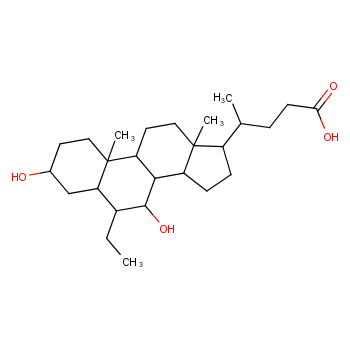
Obeticholic acid is an orally available FXR (Farnesoid X receptor) agonist. FXR plays a role in maintaining homeostasis of endogenous substances and participates in various pathological processes. It negatively regulates bile acid synthesis, controls bile acid excretion, and regulates lipid and glucose metabolism.
In May 2016, the FDA officially approved obeticholic acid for the clinical treatment of PBC in patients who are unresponsive to or intolerant of ursodeoxycholic acid (UDCA). It became the only drug approved for primary biliary cirrhosis in 20 years.
Seven months later, obeticholic acid was also conditionally approved by the EMA, becoming the first second-line treatment for PBC in the European market.
Despite obeticholic acid’s propensity to cause severe pruritus and its potential to worsen liver function in advanced liver disease and cirrhosis patients at higher doses, the FDA issued a "black box warning" in 2018. Nonetheless, this did not affect obeticholic acid's market performance.
In the first year after its approval, obeticholic acid generated sales of about $18 million. By 2018, sales grew nearly tenfold to $178 million. In 2019, sales were $250 million, and in 2020, they reached $310 million. Sales stabilized at around $300 million in subsequent years.
To some extent, this is related to the background of PBC. PBC is an autoimmune disease where inflammation of the liver’s bile ducts gradually destroys the tissue, leading to inflammation, scarring, and cirrhosis, and increasing the risk of liver cancer. Data shows that the global annual incidence of PBC is estimated to be 1.76 per 100,000 people, while the prevalence is 14.6 per 100,000 people. The disease primarily affects women, and its incidence increases with age.
Similarly, in the MASH field, which has enormous clinical demand and almost no available treatments, obeticholic acid was also highly anticipated and received breakthrough therapy designation from the FDA in 2015 for "treating MASH with liver fibrosis."
Obeticholic acid was once considered the first drug likely to be approved for MASH. The drug even tried to respond to this expectation with data.
In February 2019, Intercept announced positive mid-stage results from the 18-month REGENERATE study, which explored the use of obeticholic acid in MASH patients with liver fibrosis. In July 2022, Intercept announced that a new mid-stage analysis of the pivotal Phase III REGENERATE study had reached its predefined primary endpoint.
As a result, obeticholic acid became the first MASH drug to show positive results in Phase III clinical trials. However, the road to MASH approval was not easy, and this initial glow of obeticholic acid now appears to be just a fleeting moment.
Since its launch, obeticholic acid’s global sales have shown continuous growth. However, when viewed from an industry perspective, the gap between expectations and reality becomes apparent.
In a 2015 forecast by Evaluate, obeticholic acid was expected to generate $1.8 billion in sales by 2020. However, the actual sales were far below this expectation, which seemed to foreshadow the tumultuous future of the drug.
After achieving positive results in the MASH trial in 2019, Intercept submitted a New Drug Application (NDA) to the FDA for obeticholic acid as a treatment for MASH-induced liver fibrosis. However, the FDA requested more long-term efficacy and safety data in the following year.
In July 2022, after the new mid-stage analysis once again met the pre-set endpoints, Intercept resubmitted the application and successfully secured a Prescription Drug User Fee Act (PDUFA) date of June 22, 2023.
However, complications arose again. In May 2023, the FDA's Gastrointestinal Drugs Advisory Committee issued a negative opinion. The expert panel voted 12 to 2 (with 2 abstentions) against accelerating approval of obeticholic acid as the first MASH drug.
Intercept subsequently announced that the FDA had issued a Complete Response Letter (CRL) for the new drug application for obeticholic acid to treat pre-cirrhotic fibrosis caused by MASH. According to the CRL, obeticholic acid would need to successfully complete the long-term phase of the REGENERATE study.
After this, Intercept became disheartened, halted all MASH-related projects, refocused on liver disease and rare diseases, and began accelerating efforts to achieve profitability in 2024.
Unfortunately, before 2024's new year bells rang, Intercept took a step back from the spotlight. In September 2023, Intercept announced that it had been acquired by the Italian pharmaceutical company Alfasigma for $800 million.
Obeticholic acid, caught in a dilemma, was passed on to Alfasigma. Additionally, UK-based Advanz Pharma acquired the rights to the drug outside of the US for $405 million in 2022.
Divided between two companies, obeticholic acid did not find good fortune, suffering setbacks in both major global markets.
In June of this year, the EMA announced that, based on the review by its Committee for Medicinal Products for Human Use (CHMP), the clinical benefits of obeticholic acid were not greater than the risks, and it recommended withdrawing the marketing authorization for obeticholic acid. The EMA’s recommendation was based on the 747-302 study, which showed no significant difference in the primary composite endpoint between the treatment and control groups.
In September, the European Commission (EC) announced the withdrawal of the drug's marketing authorization. However, shortly afterward, the General Court of the European Union suspended the EC's decision to withdraw the drug from the market.
Advanz Pharma, still processing the news, was hit with a fatal blow. In November, the General Court of the European Union officially confirmed the decision to not extend the EC's withdrawal of the conditional marketing authorization for obeticholic acid in Europe.
Officially, obeticholic acid exits the European market, though Advanz disagrees with this decision. Their announcement indicated that they are in discussions with relevant national agencies to ensure that patients who need the drug can still access it.
Also in November, the FDA showed a yellow card to obeticholic acid.
The FDA's CRL revealed that, based on the meeting of the Gastrointestinal Drugs Advisory Committee in September, there was insufficient evidence that the benefits of obeticholic acid for PBC clinical outcomes outweighed the risks. The supplemental new drug application was rejected.
The second mid-term analysis of the REGENERATE study showed that after 18 months of treatment, only 22.4% of patients in the high-dose group showed improvement, and the low-dose group showed no statistically significant improvement. Regarding pruritus as a side effect, more than half of the high-dose group experienced pruritus, which significantly affected patient adherence.
The FDA's recent announcement revealed that a post-market clinical trial found that obeticholic acid treatment caused severe liver injury in PBC patients without cirrhosis.
Additionally, in patients receiving obeticholic acid treatment — those with lower disease progression risk — the drug seemed to increase the risk of death or the need for a liver transplant. For example, of 81 patients receiving treatment, 7 required a transplant, whereas only 1 out of 68 placebo patients did. There were 4 deaths in the obeticholic acid group, compared to just 1 in the placebo group.
According to regulatory data, in patients without advanced cirrhosis and no contraindications to the drug, the risk ratio for liver transplant and death was 4.77.
Based on these new signals, the FDA recommended that healthcare professionals "frequently" monitor liver function to detect early signs of liver deterioration.
However, the FDA also stated, "Based on the current data, it is unclear whether this monitoring would be sufficient to manage the risk of severe liver injury." Furthermore, if there is evidence of disease progression or the drug's efficacy for the patient is uncertain, treatment should be discontinued immediately.
At present, although obeticholic acid remains available for sale in the US, its future does not seem particularly optimistic. For a once-celebrated blockbuster drug, this is undoubtedly a rather lamentable ending.
 |
 |
 |
 EN
EN
 Agricultural News
 Food News
 Industrial News
 Cosmetic News
 Pharmaceutical News
 Science News

 13YRS
13YRS

