-
We detected your language preference as English. Would you like to switch to the English version for a better experience?
Switch to English
Stay here



Recently, Gan&Lee Pharmaceuticals announced positive results from Phase II clinical trials for three core innovative diabetes drugs they developed: GZR18, GZR4, and GZR101. These drugs showed superior or equivalent efficacy in reducing HbA1c compared to their respective comparators (Semaglutide, Insulin Degludec, and Insulin Degludec/Aspart).

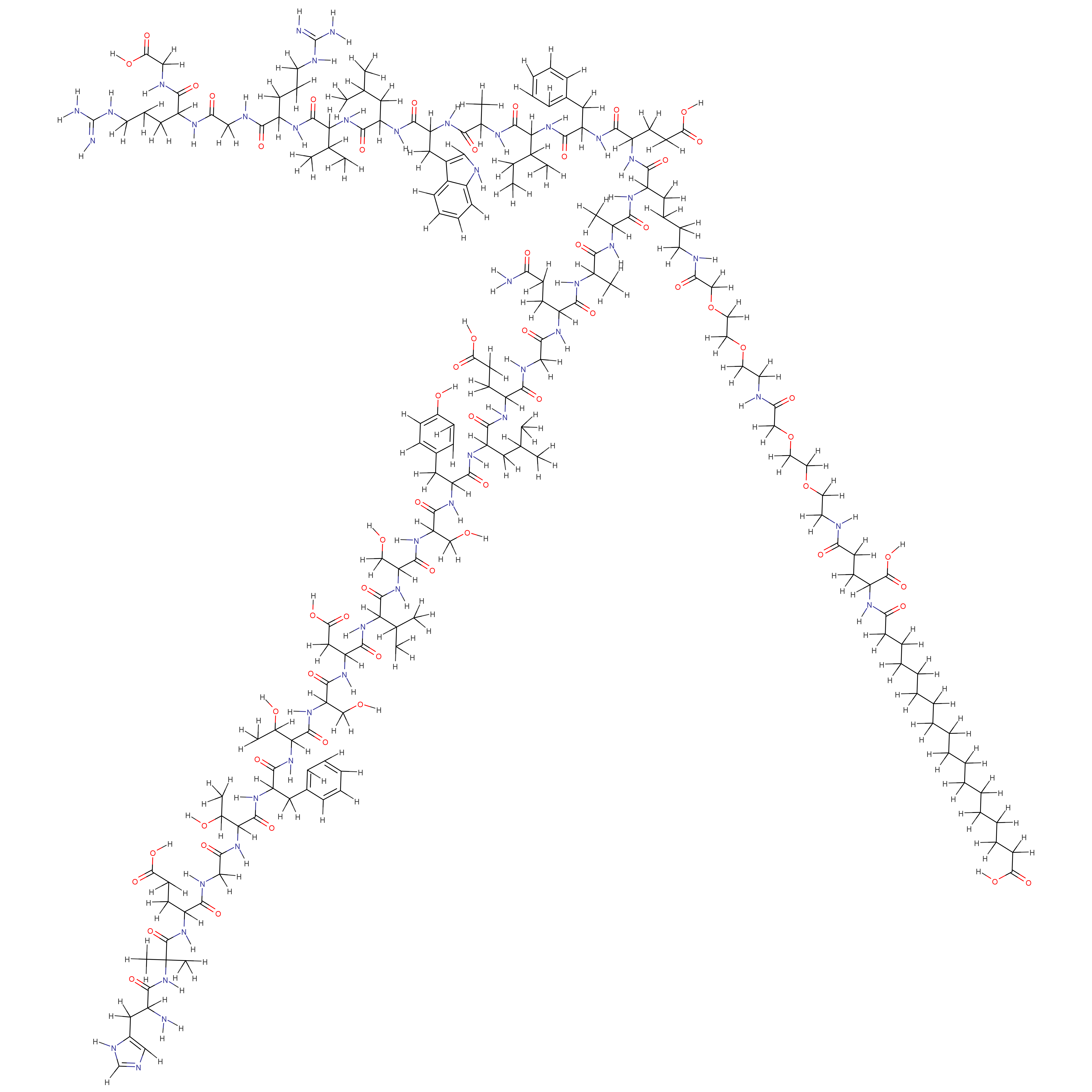
GZR18 is a glucagon-like peptide-1 receptor agonist (GLP-1RA) intended for the treatment of type 2 diabetes and weight management in overweight/obese adults. Currently in Phase II trials, preclinical data show GZR18's potential for glycemic control and weight reduction. Clinical trials have also indicated its efficacy in both areas with favorable safety characteristics.
The Phase IIb trial was a multicenter, randomized, open-label study comparing GZR18 injection to Semaglutide (Novo Nordisk?) in type 2 diabetes patients with insufficient glycemic control despite lifestyle changes and oral diabetes medication for at least 3 months. The primary endpoint was the change in HbA1c from baseline after 24 weeks of treatment. Key results include:
GZR4 is a fourth-generation insulin analog with a weekly dosing potential, offering a longer half-life and more stable blood concentration compared to daily basal insulins. Currently in Phase II trials, GZR4 represents an innovation as no weekly insulin formulations are yet approved globally.
The Phase II trial was a multicenter, randomized, open-label, parallel-controlled study comparing weekly GZR4 injection with daily Insulin Degludec (Novo Nordisk?) over 16 weeks for efficacy, tolerability, and safety. Key findings include:
GZR101 is a novel premixed dual insulin formulation, combining 50% long-acting basal insulin GZR33 and 50% rapid-acting insulin Aspart, for diabetes treatment. It aims to mimic physiological biphasic insulin secretion, controlling both fasting and postprandial glucose, simplifying therapy, enhancing adherence, and improving long-term diabetes management.
The Phase II trial was a multicenter, randomized, open-label, parallel-controlled study comparing GZR101 injection with Insulin Degludec/Aspart (Novo Nordisk?) in T2DM patients. Results include:
Diabetes is a major global health challenge, potentially leading to heart disease, stroke, blindness, kidney failure, and lower limb amputations. According to the International Diabetes Federation’s 10th Global Diabetes Atlas, there were approximately 537 million people with diabetes globally as of 2023, projected to rise to 1.31 billion by 2050. China has 141 million diabetes patients, with a prevalence rate of 12.8%, the highest globally.
Metformin is the first-line treatment for hyperglycemia in T2DM patients. For those who do not achieve target glucose levels on metformin, dual therapy is recommended. The choice of medication depends on individual characteristics, such as hypoglycemia risk and the need for weight reduction, where drugs like SGLT2i or GLP-1RA are preferred.
According to LiDing Industrial Research Institute, the global diabetes drug market reached $65.6 billion in 2022, growing by 16% year-on-year, and is expected to approach $110 billion by 2030. GLP-1 drugs saw rapid growth, with a market value of $22.8 billion in 2022, outpacing the overall diabetes drug market. In China, GLP-1, DPP-4 inhibitors, and SGLT2 inhibitors are newer and have lower market shares compared to global levels, while traditional drugs like metformin, sulfonylureas, and alpha-glucosidase inhibitors remain predominant.
Gan&Lee Pharmaceuticals is China's first high-tech biopharmaceutical company to master the industrial production of recombinant insulin analogs, with a comprehensive insulin development pipeline. The company offers six core insulin products, including five analogs and one human insulin variety, covering long-acting, rapid-acting, and premixed insulin segments. Additionally, Gan&Lee manufactures related medical devices, including reusable insulin pens and disposable pen needles.
 |
 |
 |
 EN
EN
 Agricultural News
 Food News
 Industrial News
 Cosmetic News
 Pharmaceutical News
 Science News

 1YR
1YR


