-
We detected your language preference as English. Would you like to switch to the English version for a better experience?
Switch to English
Stay here




Nuvation Bio, founded by renowned biotech entrepreneur David Hung, M.D., has received FDA approval for Ibtrozi (taletrectinib), a next-generation tyrosine kinase inhibitor (TKI) designed to treat patients with locally advanced or metastatic ROS1-positive non-small cell lung cancer (NSCLC). With this regulatory milestone, Ibtrozi is set to compete directly with drugs from industry leaders Pfizer, Bristol Myers Squibb (BMS), and Roche.
As stated in the original report, "Hung's Nuvation Bio has won FDA approval for Ibtrozi, or taletrectinib, to treat patients with locally advanced or metastatic ROS1-positive non-small cell lung cancer (NSCLC)."
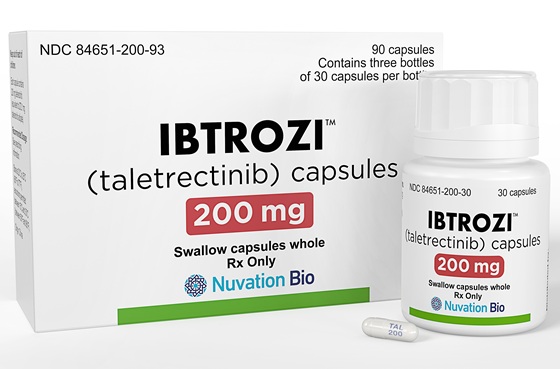
The ROS1 subset of NSCLC is well established, yet the market has been relatively underdeveloped. Currently, Roche's Rozlytrek and BMS' Augtyro are competing, while Pfizer's older TKI, Xalkori, has seen reduced use due to its inability to cross the blood-brain barrier—a key issue in patients prone to brain metastases.
"ROS1 NSCLC has not been viewed as a major market opportunity," the article notes, with combined sales of Rozlytrek and Augtyro totaling approximately $200 million in 2024. However, Jefferies analysts see potential for Ibtrozi to become a blockbuster.
Ibtrozi distinguishes itself through superior central nervous system (CNS) tolerability and enhanced selectivity. While BMS' Augtyro has shown strong tumor response data, it is also associated with CNS side effects such as dizziness and cognitive impairment. In contrast, Ibtrozi's label carries no CNS warnings, a benefit attributed to its selectivity for ROS1 over TRKb.
However, the new approval isn't without safety concerns. The FDA-approved label does include a warning about QTc interval prolongation, a potential cardiac risk not noted with Augtyro.
Ibtrozi was evaluated through two single-arm studies: Trust-I (China) and Trust-II (global). In TKI-na?ve ROS1-positive patients, response rates reached 90% and 85% respectively. Among TKI-pretreated patients, response rates were 52% and 62%. "The median duration of response was not reached or not included in the drug's label because of short follow-up times," for na?ve patients, while it was reported as 13.2 months in pretreated patients in Trust-I.
A pooled analysis of earlier data linked Ibtrozi to a 44.2-month median duration of response and 45.6-month median progression-free survival (PFS) in TKI-na?ve patients. In pretreated patients, those figures were 16.6 months (duration) and 9.7 months (PFS). These results place Ibtrozi ahead of BMS' Augtyro, which posted a 35.7-month PFS in TKI-na?ve and 9-month PFS in second-line settings.
Additionally, "among 24 second-line patients who also had measurable CNS metastases, intracranial responses were recorded in 15 (63%) individuals who took Ibtrozi."
Hung emphasized the importance of administering Ibtrozi in the first-line setting, rather than waiting for disease progression. “If you would wait for progression, all drugs become less effective,” he said. This view is reinforced by a recent update from the National Comprehensive Cancer Network (NCCN), which in January revised its guidelines to state that immunotherapy is contraindicated in ROS1-positive NSCLC.
Previously, patients often began treatment with PD-1 inhibitors and chemotherapy before genetic testing identified ROS1 mutations. The lag in test results frequently led patients to remain on initial regimens rather than switching to a more targeted therapy.
Despite the niche size, with an estimated 3,000 new ROS1-positive NSCLC cases diagnosed annually in the U.S., Ibtrozi is expected to generate substantial revenue. Jefferies analysts have projected peak sales exceeding $1 billion, assuming long-term patient adherence and favorable tolerability. Nuvation secured global rights to Ibtrozi (outside China, Japan, and Korea) through its all-stock acquisition of AnHeart Therapeutics, which had previously acquired the TKI from Daiichi Sankyo.
 EN
EN
 Agricultural News
 Food News
 Industrial News
 Cosmetic News
 Pharmaceutical News
 Science News
