-
We detected your language preference as English. Would you like to switch to the English version for a better experience?
Switch to English
Stay here




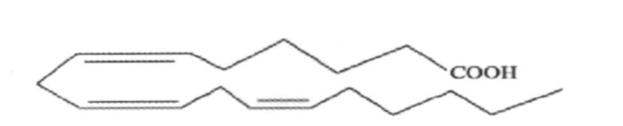
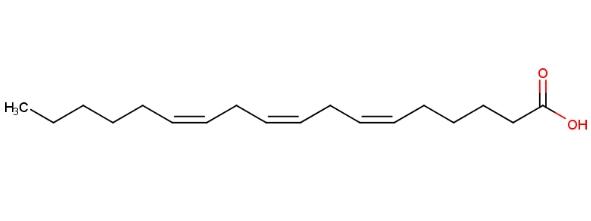
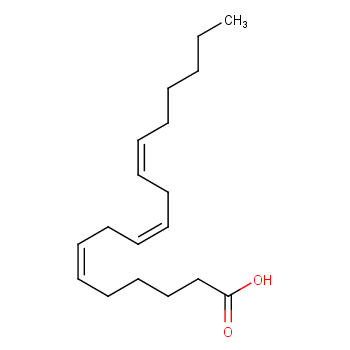
γ-linolenic acid (GLA) is a major omega-6 or n-6 fatty acid found primarily in seed oils. It is an isomer of α-linolenic acid, a polyunsaturated omega-3 fatty acid found in oils such as rapeseed, soybean, walnut, flaxseed (flaxseed oil), perilla, chia, and hemp seeds.
GLA is first isolated from the seed oil of evening primrose, a herbaceous plant used by Native Americans for treating bodily swelling. In the 17th century, it was introduced to Europe and became a popular folk remedy, earning the title of "King's Cure-All." In 1919, Heiduschka and Lüft extracted this oil from evening primrose seeds and described an unusual linolenic acid, which they named γ-. Later, Riley characterized its exact chemical structure. Although linolenic acid exists in α and γ forms, there is no β form.
γ-linolenic acid (GLA) belongs to the omega-6 series of polyunsaturated fatty acids (PUFAs). It is a colorless oily liquid at room temperature, insoluble in water, and easily soluble in non-polar solvents such as petroleum ether, ether, and n-hexane. Due to its high degree of unsaturation, GLA is relatively unstable in air, especially prone to oxidation under high-temperature conditions, and undergoes isomerization reactions of double bond positions under alkaline conditions, forming conjugated polyenes.
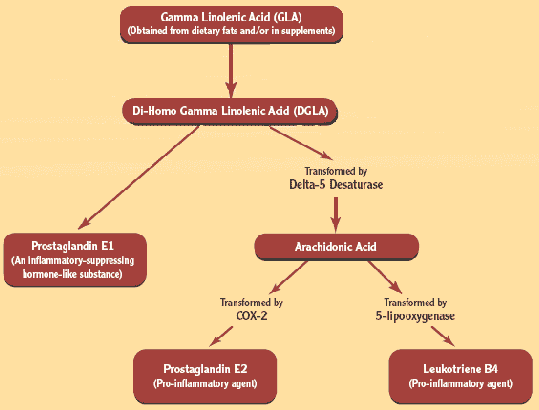
Clinical studies have shown that the metabolite of GLA, dihomo-gamma-linolenic acid (DGLA), serves as a substrate for cyclooxygenase and lipoxygenase. DGLA exhibits anti-inflammatory effects, and lipoxygenase inhibits inflammation induced by leukotriene B4. Therefore, GLA can effectively prevent and treat various inflammatory diseases involving oxidative stress.
Are you suffering from dry skin, brittle nails, or cracked heels? No matter how much lotion you use, it seems futile? Try moisturizing your skin from the inside out with essential fatty acid GLA (γ-linolenic acid). In addition to the skin signals listed above, dry hair, lumps on the back of the arms, and cracked fingertips are also signs of GLA deficiency. GLA is part of the Omega-6 essential fatty acid family needed for human growth. GLA promotes moisture and elasticity inside and outside the skin. Cracked skin, dry hair, and brittle nails may indicate a need for healthier fats like GLA. GLA can help treat dermatitis, incontinence, and asthma. In all cases, GLA supports tissue health. (It can even help reduce wrinkles.)
Managing hormonal imbalances can be challenging, especially for women with conditions such as premenstrual syndrome (PMS), polycystic ovary syndrome (PCOS), and endometriosis. These conditions can cause various painful symptoms, disrupting daily life. Nevertheless, the potential of γ-linolenic acid (GLA) in alleviating certain symptoms of premenstrual syndrome and polycystic ovary syndrome while promoting hormonal balance has been recognized.
Although there is currently no direct evidence that GLA has an impact on adverse cardiovascular events and mortality from cerebrovascular disease, research reports suggest that GLA is involved in promoting vascular relaxation and inhibiting the proliferation of smooth muscle cells associated with the progression of atherosclerosis. In populations with lower GLA levels, the incidence of peripheral arterial disease is often higher. Albea et al. studied the effect of GLA on coronary heart disease by continuously tracking the dietary habits of 76,763 women. The results of the study confirmed that dietary supplementation with GLA can reduce the risk of sudden death from coronary heart disease. Researchers believe that a daily intake of 1 g of GLA can stabilize myocardial activity, reduce the occurrence of arrhythmias, and reduce the threat of fatal coronary heart disease. Yu et al. found that feeding GLA and normal fats to spontaneously hypertensive rats and normal blood pressure rats resulted in a significant decrease in blood pressure in the GLA group. These experiments all demonstrate that GLA has a certain preventive effect on cardiovascular disease.
GLA is a polyunsaturated fatty acid with three double bonds, which serves as a precursor to important substances such as prostaglandins, thromboxanes, and leukotrienes, and plays an important role in human metabolism, attracting widespread attention in pharmacology and nutrition.
What foods are high in gamma linolenic acid? GLA is found in human milk and various common foods, with relatively low levels in offal meats. GLA is obtained from plant oils such as evening primrose (Oenothera biennis) oil (EPO), black currant seed oil, borage seed oil, and hemp seed oil. GLA is also present in varying amounts in hemp seeds, oats, barley, and spirulina. Common safflower (Carthamus tinctorius) oil does not contain GLA, but since 2011, commercially significant quantities of genetically modified GLA safflower oil containing 40% GLA have been available. Borage oil contains 20% GLA, and the GLA content of evening primrose oil ranges from 8% to 10%, while black currant oil contains 15-20%.
In addition to extraction from plants, some microorganisms can also produce GLA, such as algae and fungi. The algae primarily include spirulina, which has a high content of polyunsaturated fatty acids, with GLA present in esterified form. The GLA produced by spirulina accounts for 30% of total fatty acids and has a high level. Fungi capable of producing GLA mainly include Mucor, Aspergillus, Mortierella, and Rhizopus. The amount of GLA produced varies with different genera of fungi, among which Mortierella is particularly rich in GLA in its lipids. Under optimal conditions, the GLA yield of Mortierella can reach 1,525.20 mg/L. Currently, most fermentation-based GLA production uses Mortierella as the strain, with research focusing on mutagenesis and optimization of fermentation conditions. However, the method of obtaining GLA from microorganisms has not been widely used, mainly due to the complexity of GLA synthesis. With the deepening research on mutagenesis technology, genetically modified strains of GLA with different traits can be obtained, and the key and future direction of GLA excellent strain breeding work.
For your overall health, you should obtain a balanced intake of omega-6 and omega-3 fatty acids. In the field of nutrition, there is much controversy over the appropriate ratio of omega-6 to omega-3fatty acids in the diet. The average diet provides a significant amount of omega-6 fatty acids. Therefore, most people do not need supplements. If you suffer from conditions such as eczema or psoriasis, arthritis, diabetes, or breast tenderness (mastalgia), you may need to consult your doctor about taking omega-6 supplements.
For breastfed infants: If the mother's diet is balanced, infants should receive sufficient essential fatty acids in breast milk. Do not give infants GLA supplements unless prescribed by a pediatrician.
The dosage and form will vary depending on your condition. Black currant oil and borage oil are usually provided in capsule form. The most common dose of GLA for adults is 320-480 milligrams orally per day, for up to one year. Consult a healthcare provider to determine the most appropriate dose for your specific situation.
γ-linolenic acid is an essential fatty acid crucial for human health. Its role in maintaining cardiovascular and nervous system health, as well as regulating inflammatory responses, is highly regarded. With further research into the benefits of γ-linolenic acid, we can better understand how to obtain sufficient γ-linolenic acid through diet or supplementation, thus providing more comprehensive support for our health.
[1] You, Y., Zhang, W., Xu, R., et al. (2024). Advances in Enrichment and Physiological Effects of γ-Linolenic Acid. Grain and Oil Food Science and Technology, 32(03), 101-108. DOI:10.16210/j.cnki.1007-7561.2024.03.010.
[2] Zhou, T., Ren, F., Deng, L., et al. (2011). Research Progress on γ-Linolenic Acid and Its Physiological and Biochemical Functions. Guizhou Agricultural Sciences, 39(03), 53-58.
[3]https://en.wikipedia.org/wiki/Gamma-Linolenic_acid
[4]https://www.mountsinai.org/health-library/supplement/gamma-linolenic-acid
[5]https://vitabiotics.in/blogs/news/gamma-linolenic-acid-unravelling-the-hidden-benefits
[6]https://www.webmd.com/vitamins/ai/ingredientmono-805/gamma-linolenic-acid-gla
[7]https://www.sciencedirect.com/science/article/pii/S0022316623018114
 |
 |
 |
 |
 |
|
 EN
EN
 Agricultural News
 Food News
 Industrial News
 Cosmetic News
 Pharmaceutical News
 Science News

 6YRS
6YRS

