-
We detected your language preference as English. Would you like to switch to the English version for a better experience?
Switch to English
Stay here



What are the side effects of gamma linolenic acid? Gamma-linolenic acid (GLA) is considered a healthy fatty acid, but its use may come with potential side effects.
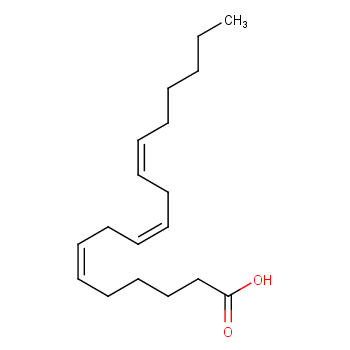
What are the side effects of gamma linolenic acid? GLA is found in the genus Oenothera, particularly O. biennis, whose fixed oil content is 7-9%. Borage oil has a yield of 25%, but it is not widely found elsewhere, although it is also present in starflower oil and black currant seed oil. GLA is usually not purified; the complete oil is used for oral supplements. GLA's structure is as follows:
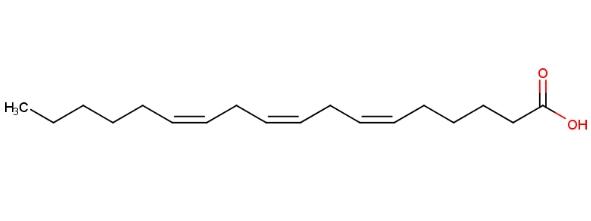
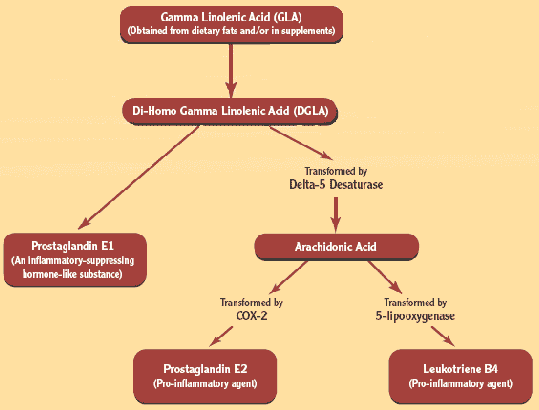
It is an important intermediate between linoleic acid and dihomo-gamma-linolenic acid (DGLA), followed by prostaglandins, thromboxanes, and leukotrienes. Delta-6-desaturase acting on linoleic acid disrupts its production, which is believed to contribute to many human disease states. Atopic eczema and premenstrual syndrome are two of the most common applications. In healthy individuals, GLA metabolizes into DGLA, which can reduce inflammation by competitively inhibiting leukotrienes and series 2 prostaglandins. Trials using 1.4 or 2.8 g/day of GLA for up to 12 months have shown gradual improvement in rheumatoid arthritis symptoms.
Inflammation is a complex biological process triggered by the body's immune system in response to injury, infection, or irritation. It involves a series of events, including:
These inflammatory chemicals are mainly produced via two pathways: the cyclooxygenase (COX) pathway and the lipoxygenase pathway. Some omega-6 fatty acids, like arachidonic acid, are converted into pro-inflammatory chemicals through these pathways.
GLA is a different type of omega-6 fatty acid. While some omega-6 fatty acids promote inflammation, GLA has anti-inflammatory properties. Reasons include:
The body converts GLA into a substance called DGLA, which can further convert into anti-inflammatory prostaglandins and leukotrienes.
GLA may also compete with arachidonic acid for conversion into inflammatory chemicals, reducing their overall production.
- Rheumatoid arthritis
- Eczema
- Diabetic neuropathy
What is linoleic acid bad for you? Oral doses of GLA up to 2.8 g daily for a year may be safe. It can cause side effects like soft stools, diarrhea, belching, and bloating. Like many drugs and natural products, GLA can produce side effects.
Common mild side effects may include:
- Acid reflux
- Diarrhea
- Itching
- Nausea
- Concentration problems
- Stomach pain
- Fatigue
Studies indicate no severe side effects from GLA in evening primrose oil. However, severe allergic reactions are possible with any drug or supplement. If you have a serious allergy to GLA or its plant sources, symptoms may include difficulty breathing, itching, and rash. Omega-6 fatty acids can reduce inflammation but may promote it at high doses or with long-term use, potentially affecting the heart.
Consider using GLA only short-term until more high-quality, long-term clinical trials are available. If you experience severe allergic reactions or any life-threatening symptoms, seek emergency medical help immediately.
Gamma linolenic acid (GLA) is an omega-6 fatty acid, and its deficiency is relatively rare. Since our bodies can produce GLA from another fatty acid called linoleic acid, a lack of GLA usually results from underlying health problems or nutritional deficiencies. Here are some potential symptoms of gamma linolenic acid deficiency:
Dry skin, itching, eczema, and inflammation can all be signs of a lack of GLA.
Brittle hair, hair loss, and dry, cracked nails may also indicate a deficiency in GLA.
GLA is synthesized from linoleic acid in food by the enzyme delta-6-desaturase (D6D). However, this process is a limiting step in the production of subsequent substances in the omega-6 series. The activity of D6D decreases with age and appears severely limited in diseases like arthritis, diabetes, hypertension, atopic eczema, or psoriasis. Particularly in cardiovascular diseases associated with metabolic syndrome, changes in the fatty acid composition of cell membranes seem due to impaired D6D activity. Factors such as stress, smoking, alcohol consumption, and increased saturated fat intake also reduce this enzyme's activity. Deficiencies in magnesium, zinc, or vitamin B6 can negatively impact the enzyme's efficiency. Insufficient GLA synthesis eventually leads to an imbalance in prostaglandin/leukotriene synthesis, favoring pro-inflammatory prostaglandins. Increasing oral GLA intake can bypass the crucial step of converting linoleic acid to GLA, ensuring adequate supply. This can restore the balance between pro-inflammatory and anti-inflammatory prostaglandins, explaining the therapeutic success of GLA in inflammatory processes.
Patients with atopic dermatitis typically have lower levels of GLA and higher levels of linoleic acid. This supports the hypothesis that this disease is also caused by a lack of D6D activity. Atopic dermatitis patients often lack omega-6 fatty acids, and several clinical studies have found that increasing GLA intake gradually improves symptoms (erythema, itching, peeling). Atopic dermatitis, also known as eczema, is a genetic condition involving both acute and chronic inflammation. The disease recurs frequently, with significant itching, often accompanied by asthma. Recent years have seen an increase in its prevalence. Studies show that the onset of AD is related to damage to delta-6-desaturase and subsequent disruption of essential fatty acid metabolism. Compared to healthy individuals, AD patients have high levels of linoleic acid in their serum but very low levels of its metabolites (such as DGLA). The lack of essential fatty acids like GLA exacerbates atopic dermatitis symptoms, so oral GLA is very effective in treating and preventing AD. However, the pathology of GLA's role in preventing and treating AD requires further research.
GLA is an effective anti-inflammatory omega-6 fatty acid synthesized from linoleic acid (LA) in the body. Linoleic acid is abundant in omega-6-rich oils like safflower, sunflower, sesame, corn, and cottonseed oil, which are not lacking in the standard American diet. If GLA precursors are abundant in most people's diets, why is GLA deficiency so rampant? It all comes down to conversion regulators and your overall health. Certain regulators support the conversion of LA to GLA via the enzyme delta-6-desaturase. These include:
- Zinc
- B6
- B3
- Magnesium
- Vitamin C
- Vitamin E
If your body lacks some of these vitamins, your GLA conversion status may be impaired. Additionally, some regulators can block or reduce the conversion of LA to GLA. These include:
- Age
- Insulin
- Coffee
- Alcohol
- Trans fats
Thus, as you can see, improving your GLA status naturally requires a holistic nutritional approach.
When considering what are the side effects of gamma linolenic acid, it is crucial to discuss with a doctor. Although gamma linolenic acid may benefit health in certain situations, its potential adverse effects should be thoroughly understood and evaluated for each individual. If you have any concerns or symptoms, be sure to consult your doctor promptly for professional advice and guidance.
[1]https://butternutrition.com/signs-of-gamma-linolenic-acid-deficiency/
[2]https://www.mikronaehrstoffcoach.com/en/micronutrients/micronutrient.335.html
[3]https://www.sciencedirect.com/topics/medicine-and-dentistry/gamma-linolenic-acid
[4]https://www.mountsinai.org/health-library/supplement/gamma-linolenic-acid
[5]https://www.verywellhealth.com/the-benefits-of-gamma-linolenic-acid
[6]Zhou Tongyong, Ren Fei, Deng Li, et al. Research progress on γ-linolenic acid and its physiological and biochemical functions [J]. Guizhou Agricultural Sciences, 2011, 39 (03): 53-58.
|
 |
 |
 |
 |
|
 EN
EN
 Agricultural News
 Food News
 Industrial News
 Cosmetic News
 Pharmaceutical News
 Science News

 6YRS
6YRS

