
What is PCl5?
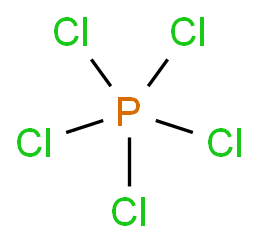
Phosphorus pentachloride, with a chemical formula of PCl5, is a compound that exists as a yellowish-white crystalline solid at room temperature. It is highly reactive and serves as a source of chlorine in various chemical reactions. PCl5 is a powerful chlorinating agent and finds applications in organic synthesis, particularly in the production of chlorinated solvents and pesticides.
What is polarity?
Polarity refers to the distribution of electric charge within a molecule, resulting in the molecule having positive and negative poles. In chemistry, polarity arises from differences in electronegativity between atoms within a molecule. Electronegativity is the measure of an atom's ability to attract electrons in a chemical bond.
In polar molecules, there is an uneven distribution of charge, with one end of the molecule being more negative and the other more positive. This unequal sharing of electrons creates a dipole moment, where the molecule has a net electric dipole, resulting in positive and negative poles.
Polar molecules exhibit unique properties, including solubility, melting point, and boiling point, and play significant roles in various chemical and biological processes.
Polarity of PCl5
Phosphorus pentachloride (PCl5) is a polar molecule due to its molecular geometry and the electronegativity difference between phosphorus and chlorine atoms. Why is PCl5 polar?
(1) Molecular Geometry
PCl5 adopts a trigonal bipyramidal molecular geometry, with phosphorus at the center and five chlorine atoms arranged symmetrically around it. While the arrangement of chlorine atoms may seem symmetrical, the molecule's overall shape results in uneven charge distribution. The three equatorial chlorine atoms are positioned in a plane, while the two axial chlorine atoms are above and below this plane. Due to the lone pair of electrons on the phosphorus atom, the molecule's geometry becomes asymmetrical, leading to polarity.
(2) Electronegativity
Phosphorus is less electronegative than chlorine, resulting in an unequal sharing of electrons in the P-Cl bonds. Chlorine atoms, being more electronegative, pull the shared electron pairs closer to themselves, creating a partial negative charge on the chlorine atoms and a partial positive charge on the phosphorus atom. This difference in electronegativity contributes to the overall polarity of the molecule.
Therefore,
phosphorus pentachloride (PCl5) exhibits polarity.
Application of PCl5 Polarity
As a polar molecule, phosphorus pentachloride (PCl5) finds applications as a chlorinating agent in organic synthesis. It is commonly used in the production of various organic compounds, including pharmaceuticals, pesticides, and chlorinated solvents. PCl5's ability to selectively introduce chlorine atoms into organic molecules makes it a valuable tool in chemical synthesis.
Highlight of Phosphorus Pentachloride
| Phosphorus Pentachloride Cas 10026-13-8 |
| Chemical formula |
PCl5 |
| Molecular shape |
Trigonal Bipyramidal |
| Relative molecular mass |
208.24 g/mol |
| Solubility |
Reacts with water, soluble in organic solvents |
| Melting point |
160.5 °C |
| Boiling point |
166.8 °C |






 EN
EN
 Agricultural News
 Food News
 Industrial News
 Cosmetic News
 Pharmaceutical News
 Science News

 2YRS
2YRS

