-
We detected your language preference as English. Would you like to switch to the English version for a better experience?
Switch to English
Stay here




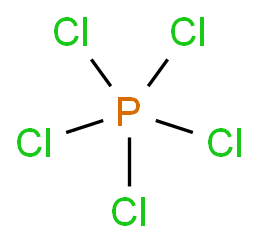
Phosphorus pentachloride (PCl5) is a highly reactive, fuming, yellowish-green compound primarily used in the production of phosphoric acid and other chlorinated derivatives. It is a binary compound formed by the combination of phosphorus (P) and chlorine (Cl), where each chlorine atom is bonded to the phosphorus atom, resulting in a total of five chlorine atoms per molecule. The chemical formula for phosphorus pentachloride is PCl5. This compound is notable for its strong intermolecular forces and high reactivity, making it a valuable reagent in various industrial and laboratory applications. Is pcl5 polar or nonpolar?
The structure of phosphorus pentachloride is characterized by a trigonal bipyramidal arrangement around the phosphorus atom, with the five chlorine atoms occupying the positions. The phosphorus atom is at the center, and the chlorine atoms are positioned at the vertices of a trigonal bipyramid, with three Cl atoms at the base and two Cl atoms at the top.
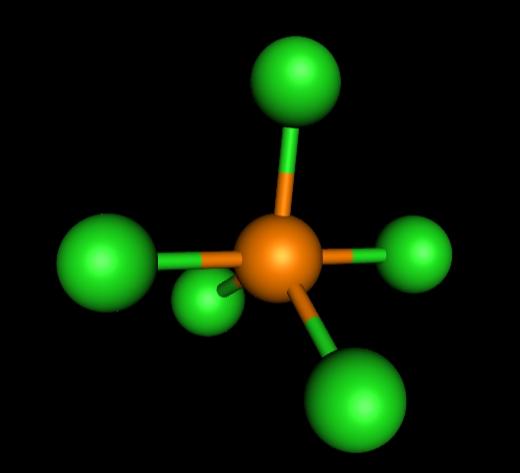
The phosphorus atom in PCl5 is sp3d hybridized, allowing it to form five bonds with the chlorine atoms. Each chlorine atom is bonded to the phosphorus atom through a single covalent bond, and due to the high electronegativity of chlorine, there is a significant difference in electronegativity between the phosphorus and chlorine atoms, leading to the formation of nonpolar P-Cl bonds. The molecule is nonpolar because the P-Cl bonds are symmetrically arranged, resulting in a net dipole moment that gives the compound its nonpolar.
Is pcl5 polar or nonpolar? Phosphorus pentachloride is considered a nonpolar molecule due to the asymmetric distribution of electron density caused by the differences in electronegativity between phosphorus and chlorine atoms. The electronegativity of chlorine is significantly higher than that of phosphorus, leading to the partial transfer of electrons towards the chlorine atoms, creating a partial negative charge on the chlorine atoms and a partial positive charge on the phosphorus atom. This results in a net dipole moment, indicating that the molecule is nonpolar.
Phosphorus pentachloride has a molecular weight of approximately 208.29 g/mol. It is a solid at room temperature and pressure, but it sublimates upon heating. The compound is highly reactive and is known for its fuming nature when exposed to moisture or water vapor. It is also hygroscopic, meaning it readily absorbs moisture from the air.
Phosphorus pentachloride is primarily used in the production of phosphoric acid through the reaction with water, where it acts as a dehydrating agent, removing water molecules from the acid. This process is essential in the manufacture of fertilizers, food additives, and pharmaceuticals. Additionally, PCl5 is used in the synthesis of other chlorinated compounds, such as chloroform, dichlorodiphenyltrichloroethane (DDT), and chlorophosphates, which find applications in various industries including agriculture, medicine, and manufacturing.
| Compound | Polarity | Applications |
| Phosphorus Trichloride (PCl3) | Polar due to the asymmetric arrangement of chlorine atoms | Used in the production of phosphine, chlorinated solvents, and as a reagent in organic synthesis. |
| Chlorine (Cl2) | Nonpolar, as it is a diatomic molecule with symmetrical electron distribution | Used as a disinfectant, oxidizing agent, and in the production of various chlorinated compounds. |
After exploring the polarity chemistry of PCl?, have you gained a deeper understanding of whether it is "polar or nonpolar"? While PCl? as a molecule is nonpolar, this does not necessarily mean that all of its bonds are nonpolar bonds. If you're interested in similar compounds or related supply chain resources, Guidechem offers a comprehensive list of global Phosphorus Pentachloride?suppliers, where you can find the right procurement plan to meet your research and production needs.
|
 |
 |
 |
 |
 |
 EN
EN
 Agricultural News
 Food News
 Industrial News
 Cosmetic News
 Pharmaceutical News
 Science News

 2YRS
2YRS

