-
We detected your language preference as English. Would you like to switch to the English version for a better experience?
Switch to English
Stay here




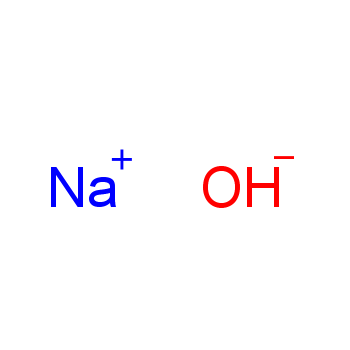
Sodium hydroxide (NaOH) is a strong inorganic base that plays a crucial role in many chemical processes and industrial applications. This compound is composed of one sodium (Na?) ion and one hydroxide (OH?) ion, and it is highly soluble in water, dissociating completely into its ions. Sodium hydroxide is known for its high polarity due to the ionic bonds between the sodium and hydroxide ions, which leads to its ability to interact strongly with water molecules. The polar nature of NaOH makes it an effective reagent in neutralization reactions, soap-making, and various other chemical processes. But what exactly does it mean for NaOH to be polar? How does this polarity influence its behavior and wide range of applications?
Polarity refers to the uneven distribution of electrical charge within a molecule or compound. This occurs when the atoms involved in a bond have different electronegativities, causing the shared electrons to be pulled more strongly towards one atom, creating a dipole—a separation of positive and negative charges. Polarity plays a critical role in how molecules interact with each other, especially in terms of solubility, reactivity, and overall chemical behavior.
Is naoh polar or nonpolar? In the case of ionic compounds like sodium hydroxide, the polarity results from the strong electrostatic attraction between positively charged sodium ions (Na?) and negatively charged hydroxide ions (OH?). These ionic bonds give NaOH its high polarity, which influences its ability to dissolve in water and participate in acid-base reactions.
Is naoh polar or nonpolar? To determine whether sodium hydroxide (NaOH) is polar or nonpolar, we can analyze it from the following perspectives: molecular structure, dissociation in water, and the nature of the bonds.
Molecular Structure: Sodium hydroxide consists of an ionic bond between sodium (Na?) and hydroxide (OH?) ions. Since ionic compounds involve the complete transfer of electrons from one atom to another, the resulting Na? and OH? ions each carry a full positive and negative charge, respectively. This results in a highly polar character.

Dissociation in Water: When sodium hydroxide is dissolved in water, it dissociates completely into Na? and OH? ions, both of which interact with water molecules through ion-dipole interactions. The sodium ion, being positively charged, attracts the partially negatively charged oxygen atoms in water molecules, while the hydroxide ion, with its negative charge, attracts the partially positively charged hydrogen atoms in water. This dissociation further confirms the polar nature of NaOH.
The Nature of the Bond: In NaOH, the bond between sodium and hydroxide is ionic, meaning the electrons are not shared but transferred. Sodium (Na) has a much lower electronegativity than oxygen (O), leading to the formation of the positively charged sodium ion (Na?) and the negatively charged hydroxide ion (OH?). This large difference in electronegativity results in a highly polar ionic bond.

Therefore, sodium hydroxide (NaOH) is a highly polar compound. The ionic bonds, the complete dissociation into ions in water, and the strong electrostatic interactions all contribute to its overall polarity.
| Sodium Hydroxide (NaOH) | |
| Molecular formula | NaOH |
| Molecular shape | Linear |
| Relative molecular mass | 40.00 g/mol |
| Solubility | Soluble in water |
| Melting point | 681 °C |
| Boiling point | 1388 °C |
| Compound | Polarity | Applications |
| Sodium Chloride (NaCl) | Ionic, highly polar | Salt, used in food, industrial processes, and water treatment. |
| Potassium Hydroxide (KOH) | Ionic, highly polar | Used in soap-making, chemical syntheses, and fertilizers. |
After exploring the polarity chemistry of NaOH, have you gained a deeper understanding of whether it is "polar or nonpolar"? While NaOH as a molecule is polar, this does not necessarily mean that all of its bonds are polar bonds. If you're interested in similar compounds or related supply chain resources, Guidechem offers a comprehensive list of global Sodium hydroxide?suppliers, where you can find the right procurement plan to meet your research and production needs.
 |
 |
|
 |
 |
 |
 EN
EN
 Agricultural News
 Food News
 Industrial News
 Cosmetic News
 Pharmaceutical News
 Science News

 1YR
1YR

