-
We detected your language preference as English. Would you like to switch to the English version for a better experience?
Switch to English
Stay here




Calcium carbonate (CaCO?) is a common inorganic compound that plays a crucial role in various chemical processes and applications. As a compound composed of one calcium atom, one carbon atom, and three oxygen atoms, calcium carbonate exhibits a unique combination of physical and chemical properties. One of the most significant characteristics of calcium carbonate is its insolubility in water, which arises due to the strong ionic bonds between the calcium and carbonate ions. This insolubility affects how calcium carbonate interacts with other substances, making it useful in applications where stability and resistance to dissolution are required. Moreover, the insoluble nature of calcium carbonate is central to its use in construction materials, pharmaceuticals, and as an industrial filler. But what exactly is solubility? How does this fundamental concept influence the behavior and applications of chemical compounds like calcium carbonate?
Polarity describes the uneven distribution of electrons within a molecule or compound, leading to the formation of positive and negative poles. In the context of chemistry, polarity arises when there is an unequal sharing of electrons between atoms, typically due to differences in electronegativity—the ability of an atom to attract electrons.
Is caco3 polar or nonpolar? To understand the bonding in calcium carbonate (CaCO?), we can examine it from three key perspectives: types of bonding, molecular structure, and electronegativity.
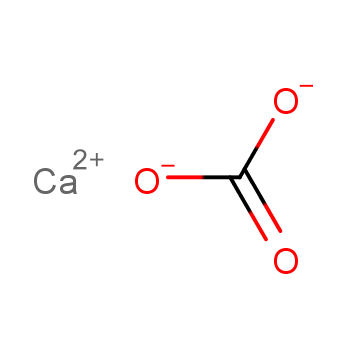
Molecular Structure: The carbonate ion (CO?2?) has a trigonal planar molecular structure with resonance stabilization. The resonance delocalizes the electrons among the three oxygen atoms, giving the C–O bonds partial double-bond character. This symmetry within the carbonate ion ensures an even distribution of electron density within the ion itself, despite the polar nature of the C–O bonds.

Ionic Bonding: Calcium carbonate consists of calcium ions (Ca2?) and carbonate ions (CO?2?). The bond between the calcium ion and the carbonate ion is ionic, resulting from the electrostatic attraction between the positively charged Ca2? and negatively charged CO?2?. Within the carbonate ion, the bonds between carbon and oxygen atoms are polar covalent due to the difference in electronegativity between carbon and oxygen.
Electronegativity: Electronegativity differences are key to understanding the bonding in calcium carbonate. Calcium has an electronegativity of 1.00, which is much lower than that of oxygen (3.44) and carbon (2.55). This large difference results in ionic bonding between Ca2? and CO?2?. Within the carbonate ion, the smaller difference in electronegativity between carbon and oxygen (3.44–2.55 = 0.89) produces polar covalent bonds.
| Element Electronegativity | |
| Ca | 1.00 |
| C | 2.55 |
| O | 3.44 |

The bonding in calcium carbonate involves both ionic and polar covalent interactions. The ionic bond between the calcium ion and the carbonate ion ensures the stability of the compound, while the polar covalent bonds within the carbonate ion contribute to its resonance-stabilized structure. This dual bonding nature makes calcium carbonate a versatile compound widely used in nature and industry.
| Calcium Carbonate Cas 471-34-1 | |
| Molecular formula | CaCO? |
| Molecular shape | Ionic crystal |
| Relative molecular mass | 100.09 g/mol |
| Solubility | MHCl:0.1 Mat 20 °C |
| Melting point | 825 °C |
| Boiling point | 800 °C |
After exploring the polarity chemistry of CaCO3, have you gained a deeper understanding of whether it is "polar or nonpolar"? Bonding in CaCO3 includes both ionic and polar covalent interactions. If you're interested in similar compounds or related supply chain resources, Guidechem offers a comprehensive list of global Calcium carbonate suppliers, where you can find the right procurement plan to meet your research and production needs.
 |
 |
 |
 |
 |
 |
 EN
EN
 Agricultural News
 Food News
 Industrial News
 Cosmetic News
 Pharmaceutical News
 Science News

 1YR
1YR

