-
We detected your language preference as English. Would you like to switch to the English version for a better experience?
Switch to English
Stay here




Calcium carbonate, a naturally occurring compound, is ubiquitous in organisms and the Earth's crust. Following quartz, calcite, the primary form of calcium carbonate, ranks as the most prevalent mineral in the crust. Geologically, calcium carbonate manifests in various mineral forms, including calcite, aragonite, and vaterite. Calcite, the predominant mineral, contrasts with the rare vaterite. The diverse mineral formations are contingent upon crystalline structures shaped by conditions during their genesis, such as temperature and pressure.
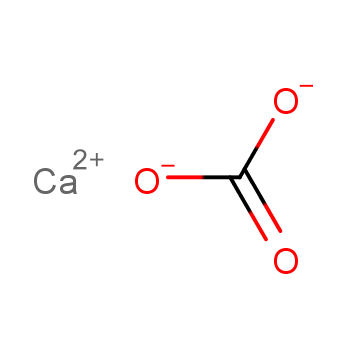
The crystalline structure of calcium carbonate in minerals resembles a triangle, with calcium at the center and a carbonate group at each vertex. In calcite, carbonates align in a single plane, while in aragonite, they occupy two planes, resulting in greater density due to closer packing. Calcite exhibits a density of approximately 2.7 g/cm3, whereas aragonite's density is around 2.9 g/cm3. Calcium carbonate is prevalent in various rocks, with prominent associations found in chalk, limestone, and marble, the latter being metamorphic limestone.
Numerous marine organisms extract and synthesize calcium carbonate from seawater to build skeletal structures. Mollusks, sponges, foraminiferans, coccolithophores, coralline algae, and corals utilize dissolved calcium and carbon dioxide to produce calcium carbonate. Corals, for instance, secrete aragonite skeletons through reactions involving calcium and bicarbonate. Oysters, in the formation of pearls, secrete calcium carbonate to encapsulate foreign objects within their shells. Over millions of years, sedimentary deposits of chalk and limestone accumulate from the remains of marine organisms.
Human utilization of calcium carbonate primarily centers on its role as a key source of calcium, crucial for combating osteoporosis.
The widespread availability of limestone deposits globally has established calcium carbonate as a fundamental construction material since ancient times. Approximately 5,000 years ago, limestone was the predominant material in constructing the Egyptian pyramids and the Sphinx. Presently, limestone remains a crucial construction resource, with the United States utilizing an estimated billion tons of crushed limestone for various construction purposes such as roads, dams, fill, and buildings in the year 2005.
Beyond its role in construction, calcium carbonate plays a significant role in diverse industrial processes. Ground calcium carbonate (GCC) and precipitated calcium carbonate (PCC) are two commonly employed forms. GCC is limestone pulverized to achieve particle sizes ranging from a fraction of a micron to several microns. PCC is produced by subjecting calcium carbonate to specific processes to attain desired characteristics in terms of form (calcite or aragonite), size, and properties.
The manufacture of PCC involves calcining limestone to produce calcium oxide (lime, CaO) at temperatures between 600°C and 900°C: CaCO3(s)→CaO(s)+CO2(g). Subsequently, calcium oxide is hydrated to form calcium hydroxide CaO(s)+H2O(l)→Ca(OH)2(aq). This calcium hydroxide is combined with carbon dioxide, generated during limestone calcination, resulting in a suspension of calcium carbonate and water: Ca(OH)2(aq)+CO2(g)→CaCO3(s)+H2O(l). The final step involves separating the calcium carbonate through filtration and other methods to obtain precipitated calcium carbonate. By adjusting the production process using different temperatures and limestone sources, various forms of calcium carbonate with varying structures, sizes, and properties are achievable for diverse applications.
Calcium carbonate finds extensive use in the papermaking industry as a filler and coating pigment to enhance paper whiteness. Papermaking plants often include dedicated facilities for PCC production. In addition to papermaking, the second most prevalent industrial application of calcium carbonate is in plastics manufacturing, particularly in the production of polyvinyl chloride (PVC), thermoset polyesters, and polyolefins. Its versatility extends to applications in paints, coatings, and as an additive for particle size distribution, opacity control, weather resistance, pH regulation, and anti-corrosion properties.
In agriculture, calcium carbonate is utilized to buffer acidic soils. Its reaction with sulfuric acid in soils produces calcium sulfate (CaSO4), carbon dioxide, and water: H2SO4(aq)+CaCO3(s)→CaSO4(s)+CO2(g)+H2O(l). The neutralizing capacity of various limes in soil is quantified in terms of calcium carbonate equivalents.
Furthermore, calcium carbonate has environmental applications, including mitigating the impacts of acid precipitation on water bodies and gas desulfurization in scrubbers for reducing sulfur emissions from air pollution sources. In the widely adopted wet scrubbing method, calcium carbonate reacts with sulfur dioxide to form calcium sulfite (CaSO3), which can be further oxidized to gypsum (see Calcium Sulfate).
Richard L. Myers (2009). The 100 Most Important Chemical Compounds: A Reference Guide. Greenwood Publishing Group. October 1, 2009. https://doi.org/10.1021/ed086p1182
 |
 |
 |
 |
 |
 |
 EN
EN
 Agricultural News
 Food News
 Industrial News
 Cosmetic News
 Pharmaceutical News
 Science News

 1YR
1YR

