-
We detected your language preference as English. Would you like to switch to the English version for a better experience?
Switch to English
Stay here



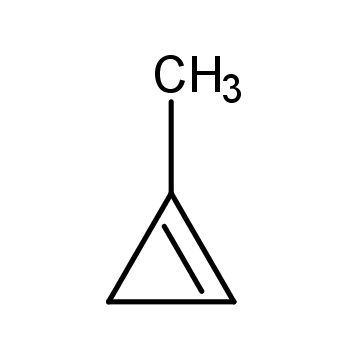
The European Food Safety Authority (EFSA) has completed its peer review of the risk assessment for the pesticide active substance 1-methylcyclopropene, based on evaluations conducted by the Netherlands, the designated rapporteur Member State. This review, prompted by Regulation (EC) No 1107/2009, was initiated following an application by AgroFresh Holding France SAS to amend the current approval conditions. The application aimed to expand the use of 1-methylcyclopropene beyond its current restriction to post-harvest storage in sealable warehouses, allowing for its application on outdoor crops, specifically pre-harvest pome fruit.

The active substance 1-methylcyclopropene was renewed on 1 August 2019 under Commission Implementing Regulation (EU) No 2019/1085, following a peer review conducted by EFSA. The existing approval limited its use to post-harvest storage applications, but AgroFresh Holding France SAS submitted an application on 4 March 2019 seeking to remove this restriction. The proposed amendment involves a new formulation, AF-701, intended for spray application on pome fruit, aiming to delay maturation during orchard growth.
EFSA’s peer review determined that the proposed use of 1-methylcyclopropene as a plant growth regulator via spray application effectively delays the maturation of pome fruit in orchards. The review found no critical issues with the identity, physical-chemical, and technical properties of the active substance and its new formulation, as well as the analytical methods used.
The assessment of mammalian toxicology revealed no concerns that could not be resolved, nor did it identify any critical issues related to the use of the new formulation on outdoor crops. Similarly, the review of residues associated with this new use did not present any unresolved issues.
Despite these positive findings, the environmental fate and behaviour assessment raised concerns regarding groundwater exposure. Specifically, the review highlighted incomplete data on the formation of the metabolite methallyl alcohol in soil. The use of default endpoints for both the active substance and this metabolite suggests that the parametric drinking water limit of 0.1 μg/L could potentially be exceeded in vulnerable groundwater, particularly at the 80th percentile annual average soil water concentrations below 1 meter depth. Additionally, the consumer risk assessment from drinking water exposure remains incomplete due to a lack of data on the residues that could be present following water treatment processes.
In the field of ecotoxicology, EFSA’s review identified unresolved issues concerning the risk to aquatic and soil environments due to methallyl alcohol. However, no critical areas of concern were identified for non-target organisms as a result of the proposed use.
While the EFSA peer review supports the proposed expansion of 1-methylcyclopropene's use, the findings underscore the need for further data collection, particularly in environmental risk assessment, to ensure comprehensive evaluation of potential impacts. The unresolved issues related to groundwater exposure and drinking water safety will need to be addressed before any final regulatory decisions can be made.
Data source: https://efsa.onlinelibrary.wiley.com/doi/full/10.2903/j.efsa.2024.8977
 |
 |
|
 EN
EN
 Agricultural News
 Food News
 Industrial News
 Cosmetic News
 Pharmaceutical News
 Science News

 4YRS
4YRS

