-
We detected your language preference as English. Would you like to switch to the English version for a better experience?
Switch to English
Stay here




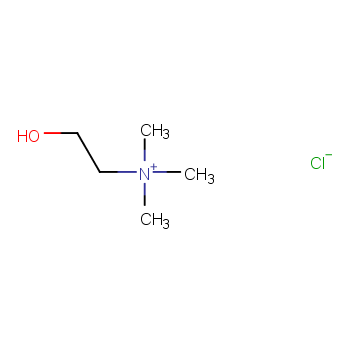
Choline Chloride, with the chemical formula [(CH3)3NCH2CH2OH]+Cl? and CAS number 67-48-1, is a water-soluble quaternary ammonium salt. It serves as a crucial source of choline in animal feed, pharmaceuticals, and as a nutrient in human supplements.
Choline Bitartrate, with the chemical formula C9H19NO7 and CAS number 87-67-2, is another common form of choline used in dietary supplements. It consists of choline bonded to tartaric acid, providing enhanced stability and bioavailability for human consumption.
Choline Chloride and Choline Bitartrate are two prevalent forms of choline supplements, each with unique characteristics and applications. While both compounds are used to fulfill the body's choline requirements, they differ in terms of chemical structure, applications, and advantages.


Choline Chloride and Choline Bitartrate both undergo well-defined chemical reactions during their synthesis. While choline chloride relies on the addition of hydrochloric acid to create a simple and highly soluble compound, choline bitartrate incorporates tartaric acid to form a more complex salt, offering enhanced bioavailability and application versatility. These differences in synthesis highlight their respective roles in dietary supplementation and industrial use.
Choline is essential for numerous physiological functions, including liver health, brain function, and cellular signaling. The two forms of choline, Choline Chloride vs Choline Bitartrate, cater to different requirements based on their unique properties. Choline Chloride is more commonly used in animal feed and industrial applications, while Choline Bitartrate is favored in dietary supplements for humans due to its improved taste and easier absorption.

Choline Chloride is extensively utilized in the animal feed industry as an essential nutrient, particularly for promoting growth and preventing metabolic disorders such as fatty liver syndrome in poultry and livestock. It plays a vital role in enhancing overall productivity and maintaining the health of animals, ensuring efficient energy utilization and proper liver function. Its high solubility and ease of integration into feed formulations make it ideal for achieving uniform nutrient distribution, thereby maximizing its benefits.
In human nutrition, Choline Chloride is incorporated into select dietary supplements aimed at supporting cognitive functions and overall brain health. This is largely due to its critical role in synthesizing acetylcholine, a neurotransmitter that facilitates memory, learning, and other essential neural activities. Beyond supplements, it is a key component in clinical nutrition products, particularly for patients dependent on parenteral nutrition, to prevent choline deficiency and support vital physiological processes. Its dual applications in animal and human health underscore its versatility and importance as a choline source.
Choline Bitartrate is primarily found in dietary supplements aimed at enhancing cognitive function, supporting liver health, and improving muscle performance. Its stability and palatability make it a preferred choice for oral supplementation, ensuring better compliance and effectiveness among users.
This compound plays a crucial role during periods of high physiological demand, such as lactation, where it helps meet the body’s increased need for choline. Adequate choline intake during this time supports the health of both the mother and the developing infant by promoting proper neurological development. Additionally, choline bitartrate aids in the synthesis of phosphatidylcholine, an essential component of cell membranes that ensures their structural integrity and facilitates efficient cellular signaling. This contribution to overall cellular health underpins its importance in maintaining optimal body function.
In conclusion, Choline Chloride and Choline Bitartrate each serve distinct purposes. Choline Chloride is more suited for industrial and animal feed applications, while Choline Bitartrate excels in dietary supplementation for humans. Both forms are effective in addressing choline deficiency and supporting various physiological functions.
| Aspect |
Choline Chloride |
Choline Bitartrate |
|---|---|---|
| Gastrointestinal Tolerance | May cause mild stomach upset in high doses | Generally well-tolerated |
| Stability | Hygroscopic, requiring careful storage | Stable in supplement formulations |
| Taste | Strong, unpleasant taste | Milder taste |
If you're looking to purchase these compounds, Guidechem is your go-to platform for sourcing high-quality raw materials and reliable suppliers. With our extensive global network, we connect you to a wide range of Choline Chloride suppliers and Choline Bitartrate suppliers, ensuring you find the right products to meet your specific research or production requirements. Whether you're in pharmaceuticals, food additives, or other industries, Guidechem simplifies the sourcing process, offering verified supplier information, competitive pricing, and seamless communication.
[1] Choline and Its Role in Human Nutrition by S. Zeisel.
[2] Advances in Animal Feed Technology by J. Wiseman.
[3] Clinical Applications of Choline Supplements in Journal of Nutrition.
[4] Understanding Choline Metabolism in Annual Review of Biochemistry.
|
 |
 |
 |
 EN
EN
 Agricultural News
 Food News
 Industrial News
 Cosmetic News
 Pharmaceutical News
 Science News

 1YR
1YR

