-
We detected your language preference as English. Would you like to switch to the English version for a better experience?
Switch to English
Stay here



Hydroxylamine hydrochloride is a compound widely used in the fields of chemical engineering and pharmaceuticals, possessing significant biological activity and functionality. As a nitrogen-containing heterocyclic compound, hydroxylamine hydrochloride plays a crucial role in drug synthesis, organic synthesis, and chemical production. Its unique chemical properties and versatility have garnered attention, being extensively utilized in industries such as pharmaceuticals, dyes, and rubber. This article will delve into the definition, properties, uses, and applications of hydroxylamine hydrochloride in various fields, aiding readers in understanding the characteristics and functions of this important compound. Let's explore what hydroxylamine hydrochloride is and its significance and applications in chemical engineering and pharmaceuticals.
Hydroxylamine hydrochloride (HH), with the molecular formula NH2OH·HCl, is a colorless crystalline solid that is soluble in water, ethanol, and glycerol but insoluble in ether. It appears as colorless or grayish-white crystalline solids. The pH of a 0.1 molar aqueous solution is 3.4, while that of a 0.2 molar solution is 3.2. What is hydroxylamine hydrochloride used for? Hydroxylamine hydrochloride finds applications in areas such as pesticides, pharmaceuticals, electrochemicals, dyes, and ore flotation.
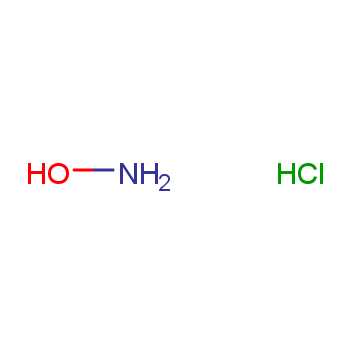
- Molecular Formula: NH2OH·HCl
- Molecular Weight: 69.5
- Melting Point: 154°C
- Density: 1.7 g/cm3
- Solubility in Water: 94 g/100ml at 25°C (highly soluble)
- Chemical Hazards: Slow decomposition upon contact with moisture. Forms toxic fumes when heated. Decomposes upon heating, posing explosion hazards. Aqueous solutions are weakly acidic. Attacks many metals.
What is hydroxylamine hydrochloride used for?
(1) Hydroxylamine hydrochloride is used in organic synthesis to prepare oximes and hydroxamic acids from carboxylic acids, N- and O-substituted hydroxylamines, and in addition reactions to carbon-carbon double bonds.
(2) In the acetyl bromide method for extracting lignin from lignocellulosic biomass, hydroxylamine hydrochloride is used to remove bromine and polybromides from the solution.
(3) In surface treatment, it is used to prepare anti-caking agents, corrosion inhibitors, and cleaning agent additives. It is also a raw material for pharmaceutical and agrochemical manufacturing. In the rubber and plastics industry, it serves as an antioxidant, vulcanization accelerator, and free radical scavenger.
(4) It is also used as a mordant in textile dyeing, as an adjunct in certain dyeing processes, as a metal extraction and flotation aid, as an antioxidant in fatty acids and soaps, and as a color stabilizer and emulsion additive in colored films.
(5) It is also used in analytical chemistry to complex iron in water with α,α-dipyridyl. Hydroxylamine hydrochloride converts all iron in Fe^2+ and then forms a coordination complex with dipyridyl.
While hydroxylamine hydrochloride may seem organic based on its name, it is actually classified as an inorganic compound.
Organic chemistry involves the study of carbon-based molecules and their interactions. These molecules typically contain carbon-hydrogen bonds (C-H) as their main chain, along with other elements such as oxygen, nitrogen, and sulfur. Key features of organic compounds include: A. Presence of carbon-hydrogen bonds. B. Ability to form long chains and complex structures. C. Typically related to or derived from living organisms.
Hydroxylamine hydrochloride (HONH2·HCl): Generally, inorganic compounds lack carbon-hydrogen bonds and have no direct connection to living organisms. They are typically composed of metals, salts, and minerals. Due to the absence of C-H bonds, hydroxylamine hydrochloride falls into the category of inorganic compounds.
Hydroxylamine hydrochloride (HH) serves as a reducing agent involved in redox processes, playing a crucial role in chemical reactions.
- Reduction Reactions: HH acts as a single-electron donor, readily accepting an electron to form water (H2O) and nitrogen gas (N2). This makes it a valuable reducing agent in various chemical reactions. For example, HH can reduce ferric ions (Fe3+) to ferrous ions (Fe2+).
- Oxidation Reactions: HH participates in oxidation-reduction (redox) reactions as it can both donate and accept electrons. As mentioned earlier, it acts as a reducing agent by donating an electron and being oxidized. However, under specific conditions, HH can also act as an oxidizing agent by accepting an electron and being reduced. For example, HH can be oxidized to nitric oxide by strong oxidants like potassium permanganate (KMnO4).
Hydroxylamine hydrochloride is a useful chemical but comes with inherent safety hazards. Let's explore these considerations and their regulatory status.
Safety Precautions:
Hazards: HH poses several health risks:
- Toxicity: Ingestion, inhalation, or skin absorption can be harmful or fatal.
- Irritation: Contact with HH can irritate the eyes, skin, and respiratory tract.
- Suspected Carcinogen: Prolonged exposure may increase the risk of cancer.
- Environmental Damage: Highly toxic to aquatic organisms.
Safety Measures:
Personal Protective Equipment (PPE): Wear gloves, goggles, respirators, and protective clothing to prevent contact.
Ventilation: Ensure proper ventilation in the workspace to avoid inhaling fumes.
Secondary Containment: Use spill trays or secondary containment to prevent environmental contamination.
Training: Personnel handling HH should receive appropriate training on safety procedures.
Regulatory Status:
Due to its hazardous nature, HH is subject to various regulations in different regions. Globally Harmonized System (GHS): HH is classified under GHS, with potential hazards and handling procedures listed using hazard pictograms and Safety Data Sheets (SDS).
- Minimize Contact: Avoid direct contact with HH and always wear appropriate PPE.
- Work in a Fume Hood: Conduct all operations involving HH in a fume hood with the airflow on.
- Dust Prevention: Use a wet sponge or cloth to clean up spilled dust and minimize dust generation.
- Secondary Containment: Use spill trays or secondary containment to prevent accidental leaks from contaminating work surfaces or surrounding areas.
- Good Hygiene Practices: Thoroughly wash hands with soap and water after handling HH and before eating, drinking, or leaving the work area to avoid contamination.
- Proper Containers: Store HH in sealed original containers. Glass containers are preferred over metal containers as HH can react with certain metals.
- Cool and Dry: Place containers in a cool, dry area away from direct sunlight and heat sources. Moisture can accelerate the decomposition of HH.
- Separate Storage: Store HH separately from incompatible substances such as strong oxidizers, acids, and bases to prevent violent reactions.
- Clear Labeling: Ensure containers are properly labeled with the chemical name, hazard pictograms, and date of receipt.
- Ventilation (if in powder form): Use local exhaust ventilation or respiratory protective devices.
- Use Protective Gloves.
- Wear goggles or face shield if handling powders, along with respiratory protection.
- Do not eat, drink, or smoke during work.
In summarizing the key points, uses, and safety considerations of hydroxylamine hydrochloride discussed in this article, we see that it is a compound of significant importance in chemical engineering and pharmaceuticals, with widespread and diverse applications. However, due to its strong acidity and irritability, caution must be exercised when using hydroxylamine hydrochloride, strictly adhering to safety protocols to avoid potential hazards. Proper handling and understanding of the characteristics of hydroxylamine hydrochloride are crucial for ensuring safe production and usage. Therefore, we emphasize the importance of handling and understanding hydroxylamine hydrochloride correctly, hoping that readers will approach its use with caution and follow relevant safety measures. We encourage readers to explore more information about hydroxylamine hydrochloride to understand its broader applications and potential value for better utilization of this important compound and ensuring its safe and effective use in various fields.
[1] Zhou Liyang, Zhang Chaoqun, Zhou Qiang. Synthesis and production method of hydroxylamine hydrochloride [J]. Chemical Production and Technology, 2021, 27(06): 12-14+8.
[2]https://webapps.ilo.org/dyn/icsc/showcard.display?p_lang=en&p_card_id=0709&p_version=2
[3]https://www.atamanchemicals.com/hydroxylamine_u25945/
[4]https://en.wikipedia.org/wiki/Hydroxylammonium_chloride
[5]https://www.ebi.ac.uk/chebi/searchId.do?chebiId=CHEBI:5807
[6]https://pubchem.ncbi.nlm.nih.gov/compound/Hydroxylamine-Hydrochloride
 |
 |
 |
 |
|
 |
 EN
EN
 Agricultural News
 Food News
 Industrial News
 Cosmetic News
 Pharmaceutical News
 Science News

 15YRS
15YRS

