-
We detected your language preference as English. Would you like to switch to the English version for a better experience?
Switch to English
Stay here



Propylene glycol, as a common food additive, is widely used in food processing and manufacturing. It is a colorless, odorless compound with various functions and uses, including as a humectant, solvent, and sweetener. In the food industry, propylene glycol is extensively utilized in various products such as baked goods, frozen foods, beverages, and more. Understanding the properties and uses of propylene glycol can help us better comprehend why it is used in foods and its effects and functions.

Propylene glycol is widely used in foods, typically employed to retain moisture, thicken, emulsify, and preserve foods. It can also lower the freezing point of water, serving as an antifreeze. Propylene glycol is a colorless, tasteless, sweet liquid used in various food items. It serves as a humectant, meaning it can attract and retain moisture. This makes it useful in products requiring moisture retention, such as ice cream, cake mixes, and candies. Propylene glycol is also used as an emulsifier, aiding in mixing oil-based and water-based components, which is beneficial in products like salad dressings and mayonnaise.
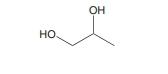
Regulatory agencies typically consider propylene glycol safe (GRAS) when used in consumer products at specific quantities. It undergoes rigorous testing to ensure its safety for human consumption. The chemical structure of propylene glycol is as follows:
Propylene glycol can be found in foods as an antioxidant, emulsifier, flavor enhancer, dough strengthener, glazing agent, formulation aid, humectant, and antimicrobial agent (helps kill or slow the growth of microorganisms such as bacteria or fungi that may contaminate food). Propylene glycol is a versatile additive present in many processed and packaged foods. Here are some foods that contain propylene glycol:
The exact ingredients of Sprite are not publicly disclosed, but propylene glycol is not commonly found in lemon-lime sodas like Sprite. It is more likely to be present in foods and beverages that require moisture retention or a certain viscosity, such as salad dressings, baked goods, and some alcoholic beverages.
Research suggests that Coca-Cola contains propylene glycol. Propylene glycol is an ingredient used as a preservative in Coca-Cola. However, the exact ingredients of Coca-Cola are proprietary, so the company has not disclosed whether propylene glycol is used in their products.
However, nearly all carbonated beverages contain propylene glycol, which can inhibit bacterial growth, ensuring optimal flavor for consumers. Additives also help distribute fatty acids evenly, maintaining flavor consistency.
In the United States, propylene glycol is generally recognized as safe (GRAS) by the Food and Drug Administration (FDA). This means it does not require pre-market approval to be used as an ingredient in foods or other types of products we consume daily. The European Union (EU) requires manufacturers to list propylene glycol as an ingredient when used in food or cosmetic products. If the propylene glycol content in a product is less than 1%, manufacturers only need to list "propylene glycol" on the label, as further identification is not necessary when the propylene glycol content is so low.
(1) Fresh fruits and vegetables: These natural, unprocessed foods do not contain any propylene glycol.
(2) Whole grains: Unprocessed whole grains such as brown rice, quinoa, and oats also do not contain propylene glycol.
(3) Lean protein: Meats, poultry, fish, and legumes usually do not contain propylene glycol as long as they are unprocessed and not pre-marinated.
(4) Eggs: Eggs are another good source of protein that naturally do not contain propylene glycol.
(5) Nuts and seeds: Nuts and seeds are healthy snack choices that also do not contain propylene glycol.
(6) Milk and unsweetened dairy products: Milk, cheese, and yogurt typically do not contain propylene glycol as long as they are unsweetened and flavorless.
(1) Read food labels carefully: Propylene glycol will be listed in the ingredients.
(2) Look for products labeled "natural" or "organic": These products are less likely to contain propylene glycol.
(3) Shop at farmers' markets or local grocery stores: These stores are more likely to sell fresh, unprocessed foods.
Through this article, we have gained an in-depth understanding of propylene glycol, a common food additive, including its definition, properties, and applications in food. Propylene glycol serves various functions in the food industry, such as moisturizing, dissolving, and thickening. In future food purchases and consumption, it's essential to pay attention to ingredient information on food labels, understand the amount of propylene glycol added to foods, and its impact on health.
[1] https://www.sciencedirect.com/sdfe/pdf/download/eid/3-s2.0-B0123694000008061/first-page-pdf
[2] https://www.cspinet.org/article/propylene-glycol
[3] https://www.drbrite.com/blogs/news/dangers-of-propylene-glycol
[4] https://tmbnotes.co/blog/does-coke-have-propylene-glycol
[5] https://www.quora.com/What-common-foods-contain-propylene-glycol
 |
 |
 |
 |
 |
 |
 EN
EN
 Agricultural News
 Food News
 Industrial News
 Cosmetic News
 Pharmaceutical News
 Science News

 1YR
1YR


