
What is SO3?
Sulfur trioxide, with a chemical formula of SO3, is a compound that exists as a colorless to white crystalline solid at room temperature. It has a strong, pungent odor and is highly reactive. This compound is known for its role in various industrial processes, particularly in the production of sulfuric acid, one of the most widely used chemicals worldwide. Sulfur trioxide is a crucial intermediate in the manufacture of sulfuric acid, playing a vital role in the Contact Process, the most common method for producing sulfuric acid industrially.
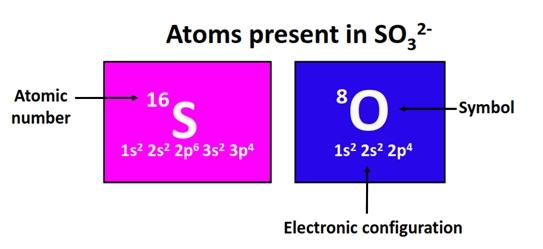
(Image Source: Is SO32- polar or nonpolar? - Polarity of SO32-)
What is Polarity?
Polarity describes the distribution of electrical charge within a molecule. In chemistry, polarity refers to the separation of electric charge along a bond or within a molecule, leading to the molecule having positive and negative poles. This phenomenon arises due to differences in electronegativity between atoms within the molecule.
Electronegativity, a property of atoms, is the measure of their ability to attract electrons towards themselves in a chemical bond. When atoms with different electronegativities bond, the shared electron pair tends to spend more time closer to the atom with higher electronegativity, resulting in a partial negative charge on that atom and a partial positive charge on the other. This creates a dipole moment, indicating the polarity of the bond or molecule.
Polar molecules exhibit distinct behaviors in chemical reactions and physical properties, influencing aspects such as solubility, melting point, and boiling point. These properties make polar molecules essential in various chemical and biological processes.
Polarity of SO3
Sulfur trioxide presents an intriguing case in polarity due to its unique molecular structure and bonding characteristics. Despite containing three oxygen atoms, each capable of forming polar bonds with sulfur, sulfur trioxide is a nonpolar molecule. Why is SO3 nonpolar?
(1) Molecular Structure
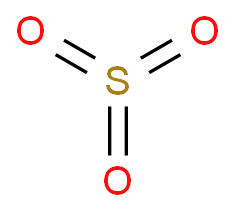
In the molecular structure of sulfur trioxide, the three oxygen atoms are arranged symmetrically around the sulfur atom. This arrangement results in a trigonal planar geometry, where the bond dipoles of the S-O bonds cancel each other out due to their symmetric distribution. Despite the polar nature of each S-O bond, the overall molecular geometry leads to a
net dipole moment of zero.
(2) Electronegativity
While oxygen is highly electronegative, the symmetric arrangement of the oxygen atoms around sulfur prevents the development of a net dipole moment. The electronegativity of sulfur (EN ≈ 2.58) is comparable to that of oxygen (EN ≈ 3.44), indicating only a slight electronegativity difference between sulfur and oxygen atoms.
Therefore, despite containing polar bonds,
sulfur trioxide (SO3) is a nonpolar molecule.
Applications of SO3 Polarity
Sulfur trioxide plays a critical role in various industrial processes, with its primary application being in the production of sulfuric acid. It serves as a crucial intermediate in the Contact Process, where sulfur dioxide reacts with oxygen in the presence of a catalyst to form sulfur trioxide, which then combines with water vapor to produce sulfuric acid. Sulfuric acid is utilized in numerous industries, including fertilizers, petroleum refining, and chemical manufacturing.
Additionally, sulfur trioxide finds application as a reagent in organic synthesis, particularly in the production of sulfonic acids and sulfonates. These compounds are essential in the manufacture of detergents, dyes, and pharmaceuticals.
Highlights of Sulfur trioxide
| Sulfur trioxide Cas 7446-11-9 |
| Molecular formula |
SO3 |
| Molecular shape |
Trigonal planar |
| Relative molecular mass |
80.06 g/mol |
| Solubility |
Reacts vigorously with water to form sulfuric acid |
| Melting point |
16.9 °C |
| Boiling point |
44.8 °C |




 EN
EN
 Agricultural News
 Food News
 Industrial News
 Cosmetic News
 Pharmaceutical News
 Science News

 4YRS
4YRS

