-
We detected your language preference as English. Would you like to switch to the English version for a better experience?
Switch to English
Stay here




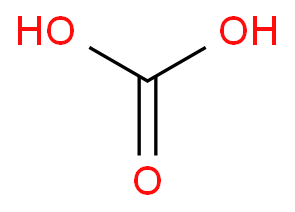
Carbonic acid, with a chemical formula of H2CO3, is a weak acid formed by the dissolution of carbon dioxide (CO2) in water. It is a diprotic acid, meaning it can donate two protons (H+) in solution. Carbonic acid plays a crucial role in the carbon cycle and is found in various natural sources such as groundwater, oceans, and the atmosphere. It also serves as an important buffer in biological systems, helping to maintain pH balance.

(Image Source: Is CO32- polar or nonpolar? - Polarity of CO32-)
Polarity describes the uneven distribution of electrons in a molecule or compound. In chemistry, the polarity of a molecule refers to the uneven distribution of positive and negative charges, resulting in the molecule having positive and negative poles. This uneven distribution is typically due to differences in electronegativity between atoms.
Electronegativity is a measure of an atom's ability to attract electrons. The polarity or non-polarity of a bond between two atoms is determined by the electronegativity of the constituent elements. When there is a significant difference in electronegativity between two atoms, with an electronegativity difference ranging from 0.5 to 2, one atom will attract the shared electron pair more strongly, causing the electron pair in the covalent bond to be skewed toward one atom, giving it a partial negative charge, while the other atom carries a partial positive charge. In this case, the molecule exhibits polarity.
Polar molecules display unique behaviors in chemical reactions and physical properties such as solubility, melting point, boiling point, etc. These properties make polar molecules important in many chemical and biological processes.
Carbonic acid, despite containing polar bonds between carbon, hydrogen, and oxygen atoms, is considered a polar molecule. Why is H2CO3 polar?
The molecular structure of carbonic acid consists of two hydroxyl (OH) groups attached to a central carbon atom, with two oxygen atoms also bonded to the carbon atom. This arrangement results in an asymmetrical distribution of electron density, leading to a net dipole moment. The presence of polar covalent bonds between the carbon, hydrogen, and oxygen atoms contributes to the overall polarity of the molecule.
The difference in electronegativity between carbon, hydrogen, and oxygen atoms leads to polar covalent bonds within the carbonic acid molecule. The oxygen atoms, being more electronegative, attract electron density more strongly, resulting in partial negative charges (δ-) on the oxygen atoms and partial positive charges (δ+) on the hydrogen atoms. This unequal sharing of electrons creates dipole moments within the molecule.

Therefore, carbonic acid, H2CO3, is a polar molecule.
The polarity of carbonic acid plays a significant role in various applications:
| Carbonic Acid Cas 463-79-6 |
|
| Chemical Formula |
H2CO3 |
| Molecular Weight |
62.03 g/mol |
| Appearance |
Colorless liquid |
| Solubility |
Soluble in water |
| Melting Point |
0.16 °C |
| Boiling Point |
100.98 °C |
 |
|
 |
 |
 |
|
 EN
EN
 Agricultural News
 Food News
 Industrial News
 Cosmetic News
 Pharmaceutical News
 Science News

 4YRS
4YRS


