-
We detected your language preference as English. Would you like to switch to the English version for a better experience?
Switch to English
Stay here



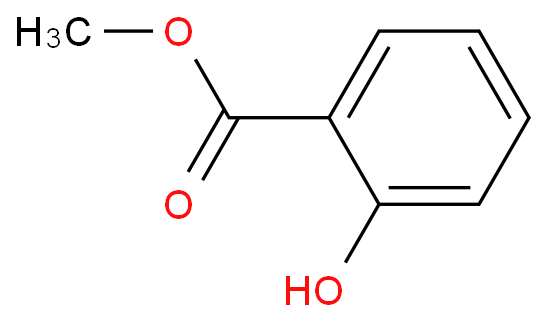
Wintergreen oil, also known as methyl salicylate, also referred to as salicylate methyl ester or o-hydroxybenzoic acid methyl ester, has the molecular formula C8H8O3. It is a colorless or pale yellow oily liquid with a strong wintergreen scent and holds significant value in various applications. In medicine, it is commonly used as an external topical agent to promote blood circulation in local areas for treating muscle pain, joint pain, and neuralgia. It is also used in toothpaste, mouthwashes for dental preservation, and in the manufacture of cosmetics, various soap fragrances, food flavorings, inks, coatings, and as a combustion aid in synthetic fibers, as well as a vital intermediate and solvent in organic synthesis.
Methyl salicylate and salicylic acid are closely related compounds but have different properties. Although both belong to the salicylate family and share similar analgesic and anti-inflammatory properties, their chemical structures differ. Methyl salicylate is an ester of salicylic acid, meaning it has an additional methyl group attached. This structural difference affects their physical properties; methyl salicylate is a liquid at room temperature with a distinct odor, unlike the solid crystalline form of salicylic acid.
Methyl salicylate is an ester of salicylic acid where the acidic carboxyl group is methylated, but the phenolic hydroxyl group remains unchanged. The COOH group in salicylic acid esterifies with methanol (CH3OH). Various studies have shown that salicylic acid is the primary metabolite formed after the hydrolysis of methyl salicylate.
Methyl salicylate and salicylic acid have different applications. Methyl salicylate, commonly found in nature as wintergreen oil, is mainly used in topical pain relief, flavoring agents, and perfumes due to its pleasant scent. Its volatility allows it to be easily absorbed through the skin. In contrast, salicylic acid is a key ingredient in many skincare products, used as an exfoliant to treat acne and other skin conditions. It is also a precursor to the widely used analgesic and anti-inflammatory drug aspirin.
How do you convert methyl salicylate to salicylic acid?
Ester compounds are formed from the reaction of an acid and an alcohol. Methyl salicylate is an ester formed from the reaction of salicylic acid and methanol, also known as wintergreen oil. Methyl salicylate to salicylic acid mechanism involves the hydrolysis of ester substances under acidic or alkaline conditions. This process, which requires heating, decomposes the ester into carboxylic acid and alcohol. In the process, methyl salicylate is treated with an aqueous base and heated. In this case, the carboxyl and phenolic-OH groups of salicylic acid are ionized, forming sodium salicylate. Then, sulfuric acid is used to acidify the reaction mixture, converting this anion to fully protonated salicylic acid. The resulting salicylic acid is a solid, nearly insoluble in water, and can be separated and purified by crystallization. Synthesis of salicylic acid from methyl salicylate involves converting methyl salicylate into salicylic acid through a process similar to the one outlined above.
According to the chemical balance equation, 1 mol of methyl salicylate can produce 1 mol of salicylic acid. To calculate the theoretical yield of salicylic acid from a given amount of methyl salicylate:
Determine the moles of methyl salicylate: Divide the mass of methyl salicylate by its molar mass.
Calculate the moles of salicylic acid: Since the molar ratio is 1:1, the moles of salicylic acid will equal the moles of methyl salicylate.
This is the theoretical yield, assuming a 100% conversion rate. In practice, due to side reactions, losses during purification, and experimental errors, the actual yield is usually lower.
Methyl salicylate to salicylic acid equation
How do you convert methyl salicylate to salicylic acid? Methyl salicylate to salicylic acid equation is represented as follows:

Methyl salicylate to salicylic acid equation
In a dry 100 mL round-bottom flask, add 3.0 g of methyl salicylate and 10 mL of ethanol, then add 30 mL of water and 7.2 g of NaOH. Mix thoroughly, then set up a reflux condenser and heat for 2 hours. Afterward, attach a distillation apparatus, distill off most of the ethanol, and cool to room temperature. Under vigorous stirring, slowly add 35 mL of 50% sulfuric acid solution, cool in an ice bath to obtain a large amount of white crystals, filter, wash with distilled water, and dry to obtain the crude product. Recrystallize using distilled water to yield 2.3 g of pure salicylic acid.
 |
|
 |
 EN
EN
 Agricultural News
 Food News
 Industrial News
 Cosmetic News
 Pharmaceutical News
 Science News

 2YRS
2YRS

