
Welcome to the intriguing world of molecular structures! Today, we'll explore the KCl Lewis structure, a compound with unique properties and applications. Understanding Lewis structures is key to unveiling how atoms bond in KCl and provides insights into its molecular geometry, hybridization, and polarity.
What is the Lewis Structures?
Lewis structures, devised by Gilbert N. Lewis, visually represent electron arrangements in molecules. By depicting valence electrons as dots and bonds as lines, Lewis structures predict a molecule's shape and properties based on the octet rule. This rule states that atoms tend to achieve stability by having eight electrons in their outer shell. Lewis structures adhere to this rule, offering a clear picture of chemical bonding.
What is Potassium chloride?
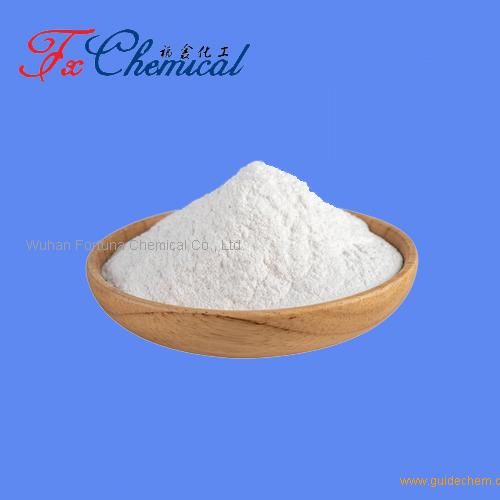
Potassium chloride (KCl) is a metal halide composed of potassium and chlorine. It is commonly used in medicine, scientific applications, and food processing. KCl appears as a white crystalline solid and is soluble in water. In its ionic form, it dissociates into potassium (K?) and chloride (Cl?) ions.
How to draw Lewis structure KCl?
Let's dive into drawing the Lewis structure of KCl:
Step 1: Identify the Elements: Potassium (K) and chlorine (Cl) are the elements involved in KCl.
Step 2: Determine Valence Electrons: Potassium has 1 valence electron, and chlorine has 7 valence electrons.
Step 3: Electron Transfer: Potassium donates its 1 valence electron to chlorine, resulting in the formation of K? and Cl? ions.
Step 4: Depict Ionic Bond: The Lewis structure shows K? and Cl? ions, indicating an ionic bond between them. There are no shared pairs of electrons.
Step 5: Ensure Octet Rule: Chlorine now has 8 electrons in its valence shell, satisfying the octet rule, while potassium achieves stability with a full outer shell after losing one electron.

kcl lewis structure
Molecular geometry of Potassium chloride
The Lewis structure of KCl does not suggest a specific molecular geometry as it forms an ionic compound. In the solid state, KCl crystallizes in a cubic lattice structure where each potassium ion is surrounded by six chloride ions, and each chloride ion is surrounded by six potassium ions, forming a regular octahedral arrangement.
Hybridization in Potassium chloride
In KCl, there is no hybridization involved as it is an ionic compound. Hybridization typically describes the mixing of atomic orbitals in covalent bonding scenarios, but KCl involves a complete transfer of electrons from potassium to chlorine, resulting in ionic bonds.
Is Potassium chloride polar or nonpolar?
Potassium chloride (KCl) is considered an ionic compound rather than polar or nonpolar. It consists of K? and Cl? ions held together by strong electrostatic forces. When dissolved in water, KCl dissociates into its constituent ions, which are individually charged and interact with water molecules.
What are approximate bond angles and Bond length in Potassium chloride?
In the solid state, the bond angles in KCl correspond to the angles in its cubic crystal lattice, which is typically 90 degrees. The bond length between potassium and chlorine ions in the crystalline structure is approximately 314 pm (picometers), determined by the ionic radii of K? and Cl? ions.
Note: The bond length and angles in ionic compounds like KCl are defined by their crystal lattice structures, rather than typical covalent bond distances and angles found in molecular compounds.
Highlight of Potassium chloride
| Potassium Chloride Cas 7447-40-7 |
| Molecular formula |
KCl |
| Molecular shape |
Cubic lattice |
| Polarity |
Ionic |
| Hybridization |
None |
| Bond Angle |
90 degrees (in crystal lattice) |
| Bond length |
314 pm |





 EN
EN
 Agricultural News
 Food News
 Industrial News
 Cosmetic News
 Pharmaceutical News
 Science News


 1YR
1YR

