-
We detected your language preference as English. Would you like to switch to the English version for a better experience?
Switch to English
Stay here




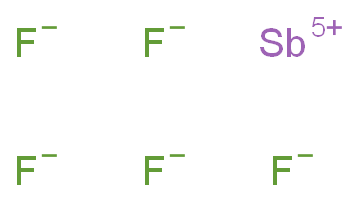
Antimony pentafluoride (SbF?) is an inorganic compound composed of one antimony atom and five fluorine atoms. It is a highly reactive, colorless solid that plays a significant role in various chemical reactions, particularly in the field of inorganic chemistry. SbF? is most commonly used as a fluorinating agent due to its strong electronegativity and its ability to form highly reactive bonds with other elements. However, its molecular geometry and polarity also make it a unique molecule in the study of chemical bonding.
Polarity refers to the distribution of electrical charge across the atoms in a molecule. In a polar molecule, the electrons are not shared equally between atoms, leading to regions of partial positive and negative charges. This happens when there is a significant difference in electronegativity between the atoms involved in the bond. Polarity can influence how molecules interact with each other, their solubility, and their overall behavior in chemical reactions.
When atoms in a molecule have different electronegativities, the more electronegative atom will pull the shared electrons closer to itself, creating a partial negative charge. Conversely, the less electronegative atom develops a partial positive charge. In molecules with an asymmetric shape, these partial charges do not cancel each other out, leading to an overall dipole moment. Is sbf5 polar or nonpolar?
Is sbf5 polar or nonpolar? To determine whether antimony pentafluoride (SbF?) is polar or nonpolar, we can analyze it using three key concepts: molecular geometry, dipole moment, and electronegativity.
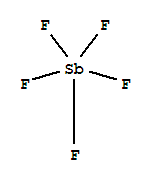
Molecular Geometry: The molecular geometry of SbF? is trigonal bipyramidal, where the five fluorine atoms are arranged around the central antimony atom. Three fluorine atoms occupy positions in a plane around the central atom, while two others are positioned axially, above and below this plane. This arrangement leads to symmetry in the molecule. As a result, the individual bond dipoles of Sb-F bonds cancel each other out, resulting in no overall dipole moment. The symmetry of the molecule contributes to its nonpolar nature.

Dipole Moment: In SbF?, the five Sb-F bonds have individual dipole moments, with each fluorine atom being more electronegative than the antimony atom. However, due to the symmetrical arrangement of the fluorine atoms, the bond dipole moments in the vertical axis cancel out. Similarly, the three Sb-F bonds positioned at 120 degrees to each other in the plane cancel out each other. Therefore, SbF? does not exhibit a net dipole moment and is considered a nonpolar molecule.

Electronegativity: Electronegativity is a key factor in determining molecular polarity. Fluorine is highly electronegative (3.98 on the Pauling scale), while antimony has a much lower electronegativity (2.05). This large difference in electronegativity means that each Sb-F bond is polar, with the fluorine atoms pulling electron density toward themselves. However, due to the symmetry of the SbF? molecule, these individual dipoles cancel out, resulting in a nonpolar overall molecule.

| Antimony Pentafluoride (SbF?) | |
| Molecular formula | SbF? |
| Molecular shape | Trigonal Bipyramidal |
| Relative molecular mass | 216.75 g/mol |
| Solubility | Slightly soluble in liquid sulfur dioxide |
| Melting point | 7 °C |
| Boiling point | 149 °C |
| Compound | Polarity | Applications |
| Phosphorus Trifluoride (PF?) | Polar due to the difference in electronegativity between phosphorus and fluorine. | Used as a fluorinating agent in organic synthesis. |
| Boron Trifluoride (BF?) | Nonpolar due to the symmetry of the trigonal planar shape. | Used as a catalyst in chemical reactions, especially in organic chemistry. |
After exploring the polarity chemistry of SbF5, have you gained a deeper understanding of whether it is "polar or nonpolar"? While SbF5 as a molecule is nonpolar, this does not necessarily mean that all of its bonds are nonpolar bonds. If you're interested in similar compounds or related supply chain resources, Guidechem offers a comprehensive list of global Antimony pentafluoride?suppliers, where you can find the right procurement plan to meet your research and production needs.
 |
|
 |
|
 |
 EN
EN
 Agricultural News
 Food News
 Industrial News
 Cosmetic News
 Pharmaceutical News
 Science News

 5YRS
5YRS

