
What is Cl2O?
Is OCl2 polar or nonpolar? Dichlorine oxide, with a chemical formula of Cl2O, is a chemical compound known for its unique properties and applications. It exists as a yellowish-orange gas at room temperature and pressure, with a pungent odor similar to that of chlorine gas. Dichlorine oxide is primarily used in chemical synthesis and as a precursor to other chlorine-containing compounds.
What is polarity?
Polarity describes the uneven distribution of electrons in a molecule or compound. In chemistry, polarity refers to the unequal sharing of electrons between atoms in a covalent bond, resulting in the molecule having positive and negative poles. This uneven distribution typically occurs due to differences in electronegativity between the atoms involved in the bond.
Electronegativity, a measure of an atom's ability to attract electrons, plays a crucial role in determining the polarity of a molecule. When atoms with different electronegativities form a bond, the atom with higher electronegativity attracts the shared electron pair more strongly, acquiring a partial negative charge, while the other atom carries a partial positive charge. This results in the molecule exhibiting polarity. Is OCl2 polar or nonpolar?
Polar molecules exhibit distinctive properties and behaviors in chemical reactions and physical interactions, making them essential in various scientific and industrial applications.
Polarity of Cl2O
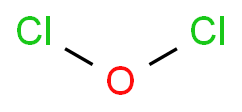
Is OCl2 polar or nonpolar? Dichlorine oxide, despite being composed of chlorine and oxygen atoms with differing electronegativities, exhibits polarity due to the asymmetrical arrangement of atoms within the molecule.
(1) Dipole Moment
In the Cl2O molecule, the oxygen atom, being more electronegative than chlorine, attracts the shared electron pair in the Cl-O bonds more strongly, resulting in a dipole moment with the negative end towards the oxygen atom and the positive end towards the chlorine atoms.
(2) Electronegativity
| Element Electronegativity |
| Cl |
3.16 |
| O |
3.44 |
The difference in electronegativity (3.44 - 3.16 = 0.28) is significant enough to create a polar bond.
Although chlorine atoms have high electronegativity, the two chlorine atoms are not evenly distributed around the oxygen atom, resulting in an overall charge separation in the molecule.
The EN value of dichlorine oxide is approximately 0.28, indicating that the electronegativity difference between chlorine and oxygen is sufficient to produce polarity.

Therefore,
dichlorine oxide, Cl2O, exhibits polarity due to the electronegativity difference between chlorine and oxygen atoms.
Application of Cl2O Polarity
Dichlorine oxide's polarity makes it valuable in various chemical reactions and processes where polar interactions are required. It serves as a precursor in the synthesis of numerous chlorine-containing compounds and finds applications in research and industrial settings.
Highlight of Dichlorine Oxide
| Dichlorine Oxide Cas 7791-21-1 |
| Molecular formula |
Cl2O |
| Molecular shape |
Linear |
| Relative molecular mass |
102.90 g/mol |
| Solubility |
Reacts with water, soluble in organic solvents |
| Melting point |
?96.9 °C |
| Boiling point |
?34.6 °C |





 EN
EN
 Agricultural News
 Food News
 Industrial News
 Cosmetic News
 Pharmaceutical News
 Science News


