-
We detected your language preference as English. Would you like to switch to the English version for a better experience?
Switch to English
Stay here




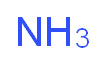
Nitrogen-hydrogen compound, commonly known as ammonia (NH?), is a simple yet essential compound in chemistry. Composed of one nitrogen atom bonded to three hydrogen atoms, ammonia is a colorless gas at standard temperature and pressure. Its structure is characterized by a trigonal pyramidal shape due to the presence of a lone pair of electrons on the nitrogen atom. The nitrogen atom carries a partial negative charge due to its higher electronegativity compared to hydrogen, resulting in a polar molecule. This polarity is crucial for ammonia's unique properties and its wide range of applications, from fertilizers to refrigerants.
Polarity in chemistry refers to the uneven distribution of electrons within a molecule or compound, leading to the formation of distinct positive and negative regions. This uneven distribution arises when there is a difference in electronegativity between the atoms involved in a bond. When two atoms share electrons unequally, one atom attracts the shared electrons more strongly, creating a partial negative charge, while the other atom experiences a partial positive charge. This results in the molecule possessing a dipole moment, indicating its polarity.
To determine the polarity of the nitrogen-hydrogen compound (ammonia, NH?), let's consider its molecular geometry, dipole moment, and electronegativity.
Molecular Geometry: Ammonia has a trigonal pyramidal molecular geometry due to the presence of one lone pair on the nitrogen atom. This asymmetry contributes to the molecule's polarity.
Dipole Moment: The nitrogen atom in ammonia is more electronegative than the hydrogen atoms, pulling the shared electrons closer to itself. This creates a partial negative charge on the nitrogen atom and a partial positive charge on each hydrogen atom, resulting in a net dipole moment and confirming ammonia's polarity.
Electronegativity: Nitrogen's electronegativity is higher than hydrogen's, causing an uneven distribution of electrons within the NH? molecule. The difference in electronegativity (approximately 0.98) supports the polarity of ammonia. In conclusion, the nitrogen-hydrogen compound (ammonia) is a polar molecule due to its molecular geometry, dipole moment, and the difference in electronegativity between nitrogen and hydrogen atoms. This polarity enables ammonia to exhibit unique properties, such as its ability to dissolve in water and its role as a fertilizer and refrigerant in various industries.
| Ammonia (NH?) | |
| Molecular formula | NH? |
| Molecular shape | Trigonal pyramidal |
| Relative molecular mass | 17.03 g/mol |
| Solubility | Highly soluble in water |
| Melting point | -78.91 °C |
| Boiling point | -33.35 °C |
| Compound | Polarity | Applications |
| Hydrogen Peroxide (H?O?) | Polar due to the hydroxyl group (-OH) | Used as bleaching agents, disinfectants, and as an oxidizing agent in various industrial processes. |
| Water (H?O) | nonpolar due to the hydrogen bonding between water molecules | Essential for life, used in numerous industrial processes, and plays a crucial role in heat transfer and chemical reactions. |
|
 |
 |
 EN
EN
 Agricultural News
 Food News
 Industrial News
 Cosmetic News
 Pharmaceutical News
 Science News