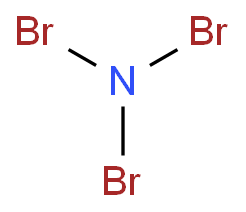
What is NBr3?
Nitrogen bromide, with a chemical formula of NBr3, is a compound known for its unique properties. It exists as a yellowish-brown gas at room temperature and pressure. This compound is highly reactive and must be handled with extreme caution due to its potential for explosive decomposition. Nitrogen bromide is soluble in water, forming a solution that is acidic in nature. It is primarily used in chemical synthesis and as a reagent in certain industrial processes. Is NBr3 polar or nonpolar?
What is Polarity?
Polarity describes the uneven distribution of electrons in a molecule or compound. In chemistry, polarity refers to the separation of electric charge within a molecule, leading to regions of partial positive and negative charges. This phenomenon arises due to differences in electronegativity between atoms within the molecule.
Electronegativity, a measure of an atom's ability to attract electrons, plays a crucial role in determining polarity. When atoms with significantly different electronegativities form a chemical bond, the shared electron pair is pulled closer to the more electronegative atom, resulting in a polar covalent bond. Molecules with polar bonds may exhibit an overall dipole moment if the molecular geometry allows for uneven distribution of charge. Is NBr3 polar or nonpolar?
Polar molecules often display unique properties, including asymmetrical charge distribution and interactions with other polar or charged species. These properties influence various chemical and physical phenomena, such as solubility, melting point, and chemical reactivity.
Polarity of NBr3
Is NBr3 polar or nonpolar? Nitrogen bromide, NBr3, exhibits interesting polarity characteristics due to its molecular structure and the electronegativity of nitrogen and bromine atoms. Why is NBr3 polar?
(1) Dipole Moment
Nitrogen bromide consists of one nitrogen atom and three bromine atoms. Nitrogen is more electronegative than bromine, leading to polar covalent bonds between nitrogen and each bromine atom. However, the molecular geometry of NBr3 is trigonal pyramidal, resulting in an uneven distribution of charge within the molecule. The dipole moments of the polar bonds do not cancel each other out, leading to a net dipole moment. As a result, nitrogen bromide is a
polar molecule.
(2) Electronegativity
| Element Electronegativity |
| N |
3.04 |
| Br |
2.96 |
The difference in electronegativity (3.04 - 2.96 = 0.08) suggests a relatively low polarity.
Despite the polar nature of individual bonds, the trigonal pyramidal geometry of NBr3 results in an overall dipole moment, making it a polar molecule. The slight difference in electronegativity between nitrogen and bromine contributes to the molecule's polarity.

Therefore,
nitrogen bromide, NBr3, exhibits polarity.
Applications of NBr3 Polarity
While nitrogen bromide is primarily known for its reactivity and use in chemical synthesis, its polarity can influence its interactions with other substances. The polar nature of NBr3 may affect its solubility and reactivity in various solvent systems, making it useful in specific chemical reactions where polar interactions are desired. Additionally, understanding the polarity of nitrogen bromide can aid in the design and optimization of synthetic routes that involve its use as a reagent.
Highlight of Nitrogen Bromide
| Nitrogen Bromide Cas 15162-90-0 |
| Chemical Formula |
NBr3 |
| Molecular Shape |
Trigonal pyramidal |
| Relative Molecular Mass |
242.72 g/mol |
| Boiling Point |
21.4 °C |
| Melting Point |
?61.3 °C |
| Solubility |
Soluble in water, forming an acidic solution |




 EN
EN
 Agricultural News
 Food News
 Industrial News
 Cosmetic News
 Pharmaceutical News
 Science News