-
We detected your language preference as English. Would you like to switch to the English version for a better experience?
Switch to English
Stay here




Magnesium fluoride (MgF?) is an inorganic compound composed of magnesium (Mg) and fluorine (F). It is a white crystalline solid that is insoluble in water and has a high melting point. Magnesium fluoride is widely used in optical applications, particularly in the manufacture of lenses, optical fibers, and coatings, due to its unique optical properties. Despite the presence of ionic bonds between magnesium and fluorine, MgF? is considered polar as a whole. But what exactly makes magnesium fluoride polar, and how do its properties influence its applications?
Polarity refers to the distribution of electrical charge within a molecule or compound. In polar molecules, there is an unequal distribution of electrons, resulting in partial positive and negative charges at different points of the molecule. This is typically due to the difference in electronegativity between the atoms involved. On the other hand, nonpolar molecules exhibit an equal or nearly equal distribution of charge.
While ionic compounds like magnesium fluoride may have polar bonds due to the electronegativity difference between magnesium and fluorine, the overall symmetry and lattice structure can result in a nonpolar characteristic when considering the compound as a whole. Is mgf2 polar or nonpolar?
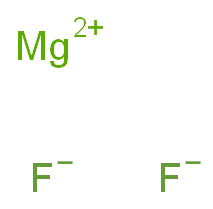
Is mgf2 polar or nonpolar? Magnesium fluoride (MgF?) is an ionic compound made up of magnesium cations (Mg2?) and fluoride anions (F?). The ionic bonds between magnesium and fluorine arise due to the electrostatic attraction between oppositely charged ions. While individual bonds within MgF? are polar, the overall structure of the compound leads to a polar character.
Molecular Structure: Magnesium fluoride forms a crystalline lattice structure, with each magnesium ion surrounded by fluoride ions. This highly symmetrical arrangement of ions in the crystal lattice cancels out any dipole moments of individual bonds, making the compound overall polar.

Electronegativity: The electronegativity difference between magnesium (1.31) and fluorine (3.98) is significant, leading to the formation of polar bonds. However, the ionic nature and the symmetrical arrangement of ions in the crystal lattice cause the dipole effects to cancel out, resulting in no net dipole moment for the overall polar compound.

Magnesium fluoride has several important applications due to its unique physical properties, especially in the field of optics and electronics.
| Magnesium Fluoride (MgF?) Information | |
| Molecular Formula | MgF? |
| Molecular Shape | Crystalline |
| Relative Molecular Mass | 62.30 g/mol |
| Solubility | Insoluble in water |
| Melting Point | 1,262 °C |
| Boiling Point | Decomposes before boiling |
| Compound | Polarity | Applications |
| Calcium Fluoride (CaF?) | Ionic | Used in optics and as a flux in metallurgy |
| Sodium Fluoride (NaF) | Ionic | Used in water fluoridation and in dental care products |
| Beryllium Fluoride (BeF?) | nonpolar | Used in specialized optical applications |
After exploring the polarity chemistry of MgF?, have you gained a deeper understanding of whether it is "polar or nonpolar"? While MgF? as a molecule is polar, this does not necessarily mean that all of its bonds are polar bonds. If you're interested in similar compounds or related supply chain resources, Guidechem offers a comprehensive list of global Magnesium fluoride suppliers, where you can find the right procurement plan to meet your research and production needs.
 |
|
 |
 |
 |
 EN
EN
 Agricultural News
 Food News
 Industrial News
 Cosmetic News
 Pharmaceutical News
 Science News

 1YR
1YR

