-
We detected your language preference as English. Would you like to switch to the English version for a better experience?
Switch to English
Stay here




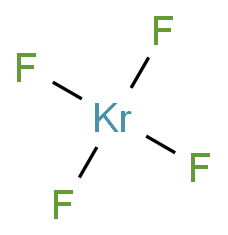
Krypton Tetrafluoride (krf4), also known as Krypton(0) Tetrafluoride, is a chemical compound with the molecular formula KrF4. This compound consists of a single krypton (Kr) atom bonded to four fluorine (F) atoms. Krypton Tetrafluoride is an inorganic compound that falls under the group of halides, which are compounds formed by the reaction of a metal with a halogen.
Polarity is a term used in chemistry to describe the uneven distribution of electrical charge within a molecule. It occurs when the electrons in a covalent bond are not shared equally between the atoms involved. This leads to one end of the molecule having a partial positive charge (+) and the other end having a partial negative charge (-). This property influences the molecule's behavior in various chemical reactions and its interactions with other substances.
KrF? (Krypton Tetrafluoride) is a polar molecule. Here’s a detailed explanation based on its molecular structure, dipole moments, and electronegativities:
Molecular Structure
KrF? has a square planar geometry. The krypton (Kr) atom is at the center, surrounded by four fluorine (F) atoms positioned at the corners of a square. This structure results from the sp3d2 hybridization of krypton. In KrF?, there are also two lone pairs of electrons on the krypton atom, which are located opposite each other, maintaining the square planar shape.
Dipole Moments
Each Kr-F bond is polar due to the difference in electronegativity between krypton and fluorine. However, because of the symmetrical square planar structure, the dipole moments of the four Kr-F bonds are oriented symmetrically around the central krypton atom. The bond dipoles cancel each other out, leading to no net dipole moment in a perfect symmetrical square planar configuration.
Electronegativities
Fluorine is highly electronegative (3.98), while krypton has a lower electronegativity (around 2.6). The difference in electronegativity between the krypton and fluorine atoms creates polar Kr-F bonds. However, due to the symmetry of the square planar structure, these polarities do not result in an overall dipole moment.
In conclusion, while the individual Kr-F bonds are polar, the overall molecule is nonpolar due to the symmetrical square planar geometry, which allows for the cancellation of dipole moments. Thus, KrF? is considered nonpolar.
Although Krypton Tetrafluoride is not commonly encountered in everyday applications, it may have specialized uses in research, industry, and potentially in advanced materials' science:
Research: Krypton Tetrafluoride can be utilized in laboratory settings for studying the properties of polar compounds or in the development of new materials. Industry: In specialized industries requiring high-purity gases or specific reagents, Krypton Tetrafluoride might find use in semiconductor manufacturing, cryogenics, or as a component in certain chemical reactions.
Advanced Materials Science: The unique properties of Krypton Tetrafluoride could be leveraged in the development of new materials with enhanced optical, electronic, or thermal properties.
 |
|
 |
 EN
EN
 Agricultural News
 Food News
 Industrial News
 Cosmetic News
 Pharmaceutical News
 Science News