-
We detected your language preference as English. Would you like to switch to the English version for a better experience?
Switch to English
Stay here




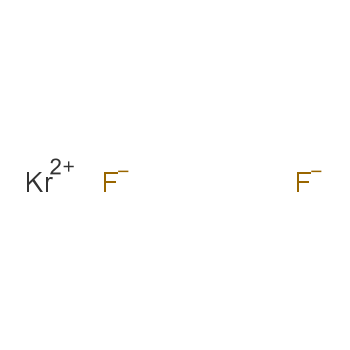
Krypton difluoride, with the CAS number 13773-81-4, is a compound primarily used in the semiconductor industry for etching processes. As a highly reactive and stable compound, KrF? plays a crucial role in the manufacturing of microchips and other semiconductor devices.
Polarity refers to the uneven distribution of electrons within a molecule or compound, resulting in regions with partial positive and negative charges. This uneven distribution arises due to differences in electronegativity among atoms, leading to the formation of dipoles.
KrF? (Krypton Difluoride) is a nonpolar molecule. Here's the explanation based on molecular structure, dipole moments, and electronegativities:
Molecular Structure: KrF? has a linear geometry. Krypton (Kr) is in the center, and two fluorine (F) atoms are bonded to it, one on each side. This linear structure arises due to the sp3d hybridization of krypton, with three lone pairs occupying equatorial positions and the fluorine atoms occupying axial positions. The symmetry of this linear structure plays a key role in determining the polarity of the molecule.

Dipole Moment: Each Kr-F bond is polar because of the difference in electronegativity between krypton and fluorine. However, since the molecule is linear and symmetrical, the dipole moments of the two Kr-F bonds point in opposite directions and cancel each other out. As a result, the molecule as a whole does not have a net dipole moment.
Electronegativity: Fluorine is highly electronegative (3.98), while krypton has a lower electronegativity (around 2.6). This difference makes the Kr-F bonds polar, with fluorine pulling electron density towards itself. However, due to the linear structure of the molecule, the polarities of the two bonds counterbalance, leading to no overall dipole moment.

The nonpolar nature of KrF? (Krypton Difluoride) influences its applications, particularly in specialized areas of chemistry and material science. Some of the key applications that leverage its properties include:
Powerful Oxidizing Agent: KrF? is one of the strongest oxidizing agents, thanks to the high electronegativity of fluorine and the weak Kr-F bond. Its nonpolar structure allows it to be used in various chemical reactions without reacting with solvents or environments that are sensitive to polar compounds. It is often used to oxidize compounds that are difficult to oxidize by other means, such as noble metals or inert gases.
Fluorination Reactions: Due to the high reactivity of fluorine atoms in KrF?, it is used in fluorination reactions, particularly in the preparation of high-energy materials, specialty chemicals, and compounds containing fluorine. Its nonpolar nature allows it to be compatible with organic solvents that might otherwise be incompatible with polar fluorinating agents.
Etching Agent in Semiconductor Industry: KrF? is used in the semiconductor industry for the etching of silicon-based materials. In microelectronics, nonpolar gases like KrF? are favored in certain etching processes because they allow for more controlled and uniform etching without causing issues related to dipole interactions with surfaces.
Molecular Formula: KrF?
Molecular Shape: Linear due to the symmetrical arrangement of atoms
Relative Molecular Mass: Approximately 118.2 g/mol
Solubility: Generally insoluble in water but soluble in organic solvents
Melting Point: Around -143°C
Boiling Point: About 127°C
Physical State: Solid at room temperature
Sulfur Difluoride (SF?): Polar molecule due to its bent shape and polar S-F bonds.
Nitrogen Difluoride (NF?): Highly polar due to the electronegative nitrogen atom. Mainly used in the synthesis of fluorides and as a reagent in organic chemistry. This concludes the overview of Krypton Difluoride, its polarity, and its applications in the semiconductor industry and beyond.
|
 |
 |
 EN
EN
 Agricultural News
 Food News
 Industrial News
 Cosmetic News
 Pharmaceutical News
 Science News