-
We detected your language preference as English. Would you like to switch to the English version for a better experience?
Switch to English
Stay here




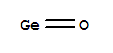
Germanium monoxide (H?GeO) is a chemical compound composed of two hydrogen atoms, one germanium atom, and one oxygen atom. As a simple molecule, H?GeO plays a significant role in both theoretical chemistry and in the study of germanium-based compounds. The unique properties of germanium monoxide arise from its relatively simple molecular structure, which influences how it interacts with other substances. Despite its small size, the molecule demonstrates intriguing characteristics, particularly in terms of its polarity. So, what exactly is polarity, and how does it apply to a molecule like H?GeO?
Polarity refers to the distribution of electrical charge around a molecule. In polar molecules, electrons are not shared equally between atoms, causing partial positive and negative charges. This uneven distribution of charge can lead to interactions with other polar substances. Polarity arises due to differences in electronegativity, the tendency of atoms to attract electrons. Molecules with highly electronegative atoms, such as oxygen, tend to develop partial negative charges at these atoms, with partial positive charges elsewhere in the molecule.
When the molecule has a significant electronegativity difference between atoms, this leads to a dipole moment. In nonpolar molecules, the electron distribution is more even, and there are no distinct poles. Is h2geo polar or nonpolar?
Is h2geo polar or nonpolar? To determine if germanium monoxide (H?GeO) is polar or nonpolar, we can analyze it from three perspectives: molecular geometry, dipole moment, and electronegativity.
Molecular Geometry: The molecular geometry of H?GeO is plane of triangles. The germanium atom is centrally located, with the two hydrogen atoms on one side and the oxygen atom on the other. This symmetrical arrangement means that the charge distribution around the germanium atom is uniform, leading to no net dipole moment across the molecule.

Dipole Moment: A molecule’s dipole moment depends on the separation of charges within it. In H?GeO, although oxygen is more electronegative than both germanium and hydrogen, the linear geometry causes the dipoles of the individual bonds (O-H and Ge-O) to cancel each other out. This results in no overall dipole moment, meaning that H?GeO does not have a net dipole.
Electronegativity: Electronegativity plays a crucial role in determining polarity. Germanium has an electronegativity of 2.01, oxygen has an electronegativity of 3.44, and hydrogen has an electronegativity of 2.20. While the oxygen atom attracts electrons more strongly than germanium and hydrogen, the linear shape of the molecule ensures that the individual bond polarities cancel out, leading to no net charge distribution across the molecule.

Therefore, germanium monoxide (H?GeO) is a nonpolar molecule. Its symmetrical molecular geometry and the equal distribution of charge in the linear structure prevent the formation of a net dipole moment, resulting in no overall polarity. This characteristic influences its interactions with other substances and its behavior in various chemical reactions.
| Germanium Monoxide (H?GeO) | |
| Molecular Formula | H?GeO |
| Molecular Shape | Plane of triangles |
| Relative Molecular Mass | 90 g/mol |
| Compound | Polarity | Applications |
| Silicon Monoxide (SiO) | Nonpolar, linear structure | Semiconductor applications, material science |
| Germanium Dioxide (GeO?) | Nonpolar | Used in optics, semiconductors, and as a catalyst in various reactions |
After exploring the polarity chemistry of H2GeO, have you gained a deeper understanding of whether it is "polar or nonpolar"? While H2GeO as a molecule is nonpolar, this does not necessarily mean that all of its bonds are nonpolar bonds. If you're interested in similar compounds or related supply chain resources, Guidechem offers a comprehensive list of global Germanium monoxide suppliers, where you can find the right procurement plan to meet your research and production needs.
|
 |
 |
 EN
EN
 Agricultural News
 Food News
 Industrial News
 Cosmetic News
 Pharmaceutical News
 Science News


