-
We detected your language preference as English. Would you like to switch to the English version for a better experience?
Switch to English
Stay here



Citric acid is a common organic acid used as a food additive, cleaner, and more. Is citric acid polar? In terms of its chemical properties, citric acid does exhibit some polarity. Polar molecules play an important role in chemistry, influencing the properties and reactions of substances. Therefore, understanding the polarity of citric acid is crucial for comprehending its applications in various fields. This article will delve into the polar properties of citric acid and its dielectric constant. Let's explore the polarity of citric acid and its significance.
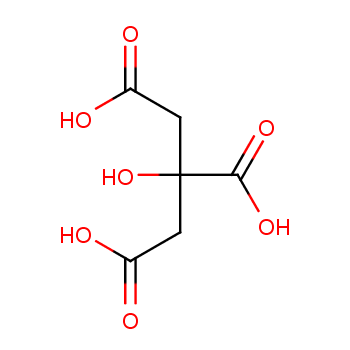
Citric acid is a naturally occurring organic acid found in citrus fruits like lemons and oranges, giving them their sour taste. It appears as a white crystalline powder and is widely used as a natural food preservative and flavor enhancer in food and beverages. In biochemistry, it serves as an intermediate in the Krebs (citric acid) cycle, making it essential in the metabolism of almost all living organisms. Citric acid is also used as an environmentally friendly cleaner. Its molecular structure consists of six carbon atoms, eight hydrogen atoms, and seven oxygen atoms, forming three carboxylic acid groups. The acidity of citric acid comes from these carboxyl groups' ability to donate protons (H+ ions) in water.

In chemistry, the way atoms share electrons determines a molecule's polarity, which significantly affects its behavior and properties.
Polar molecules arise when there is a significant difference in the electronegativity (the attraction of atoms for electrons) of atoms within the molecule. Atoms with higher electronegativity pull the shared electrons closer, creating a slightly negative region around themselves and a slightly positive region around the other atom. This unequal sharing of electrons results in a dipole moment, where the molecule has separated positive and negative charges. Water (H2O) is a classic example due to the higher electronegativity of oxygen compared to hydrogen.
On the other hand, nonpolar molecules are like harmonious electron sharers. They either consist of a single type of atom (e.g., oxygen O2), where there's no electronegativity issue, or have multiple atoms but with negligible differences in electronegativity, resulting in symmetrical electron sharing. An example is methane (CH4), where four hydrogen atoms symmetrically surround the central carbon, sharing electrons equally.
Polarity plays a crucial role in various chemical phenomena:
Polar molecules are attracted to each other due to their positive and negative regions. This attraction leads to stronger intermolecular forces, such as hydrogen bonding (a special case of polar molecules with hydrogen-oxygen, hydrogen-nitrogen, or hydrogen-fluorine bonds), which is vital for the unique properties of water.
Polar molecules tend to dissolve in other polar solvents like water because positive and negative regions can interact well. It's well-known that oil (nonpolar) and water (polar) don't mix due to the lack of this attraction.
Polarity influences how molecules react. For example, polar molecules can disrupt ionic bonds (attraction between oppositely charged ions) due to their inherent charge separation.
The polarity of citric acid depends on two key factors: the presence of polar covalent bonds and the overall shape of the molecule. Polar covalent bonds occur when there's unequal electron sharing between atoms, resulting in slight positive and negative regions within the molecule. Citric acid has several such bonds, particularly between oxygen and hydrogen atoms. Additionally, its structure contains hydroxyl (-OH) groups, further enhancing its polarity.
Citric acid, a common organic acid found in citrus fruits, is a highly polar molecule. This polarity arises from its molecular structure. Citric acid is inherently a highly polar compound because its structure includes three acidic groups and one hydroxyl substituent. Citric acid contains hydroxyl (OH) groups, where oxygen's electronegativity is stronger than hydrogen's. This forms a polar bond, pulling electron density toward oxygen and giving the hydroxyl group a partial negative charge. Additionally, the arrangement of these hydroxyl groups and central carbonyl (C=O) throughout the molecule creates an uneven distribution of charges, making citric acid polar. This polarity allows citric acid to dissolve well in water and other polar solvents, aiding its various applications in food and industry.
Scientific research confirms the polarity of citric acid. Studies reveal its high solubility in water, a hallmark of polar molecules. Water molecules themselves are polar and readily dissolve citric acid due to hydrogen bonding with the hydroxyl groups on citric acid. Furthermore, experiments demonstrate citric acid's ability to conduct electricity in solution, another strong indicator of polarity. These collective observations unequivocally establish citric acid as a polar molecule. This polarity allows citric acid to dissolve well in water and other polar solvents, aiding its various applications in food and industry.
Citric acid is a polar covalent acid. Let's analyze the reasons behind this by understanding different types of bonds and how they affect molecules.
The interaction between oppositely charged ions is called an ionic bond, essentially an electrostatic attraction between cations and anions. It typically involves bonding between metals and nonmetals when there's a large electronegativity difference between the two atoms. For example, chlorine and sodium bond via an ionic bond to form sodium chloride. In this case, chlorine's high electronegativity allows it to take an electron from the less electronegative sodium to fulfill the octet rule, resulting in chloride existing as -1 and sodium as +1, bonded together by Coulombic electrostatic forces. Ionic bonds are thus considered a bonding mode between metals and nonmetals.
This involves the sharing of electrons between two atoms. When the sharing is equal, the bond is nonpolar covalent (as in oxygen O2). However, if unequal sharing occurs due to differences in electronegativity between the atoms, a polar covalent bond arises.
Citric acid is a molecule with the formula C6H8O7. The bonds within the molecule are primarily covalent. However, its key polarity lies in:
The carboxyl group consists of a double bond between a carbon atom and an oxygen atom, with a hydroxyl (-OH) attached to the carbon atom. The oxygen atoms in these groups have high electronegativity, pulling electrons towards themselves and creating a partially negative charge at one end of the molecule.
The oxygen in the hydroxyl group is also electronegative, producing a similar partial negative charge.
Citric acid has covalent bonds, but the presence of electronegative oxygen atoms in these functional groups results in uneven electron sharing, making the molecule polar. Partial charges, positive and negative, due to these functional groups' arrangement, cause electron density to be unevenly distributed, resulting in a polar molecule. In conclusion, citric acid is not ionic because it does not involve complete electron transfer. The presence of electronegative oxygen atoms in its functional groups makes it a polar molecule.
The dielectric constant, also known as the relative permittivity, is a material property that reflects its ability to store electrical energy compared to a vacuum. In simple terms, it reflects how easily a material polarizes under an electric field.
Polarization refers to the separation of positive and negative charges within a molecule due to an external electric field. Materials with higher dielectric constants undergo greater polarization, meaning their internal charges are more susceptible to external influences.
The dielectric constant is directly related to the polarity of the molecule. Because of uneven electron distribution, polar molecules have positive and negative regions. These permanent dipoles can align with an electric field, contributing to higher dielectric constants. In contrast, nonpolar molecules have symmetrical charge distributions and minimal interaction with the field, resulting in low dielectric constants.
While there are no reported dielectric constants for citric acid in the literature, it can be assumed that its dielectric constant might be similar to other organic acids. Based on this assumption and considering the partial melting of mannitol (whose dielectric constant is 33.5), citric acid's dielectric constant may range from 33.5 to 58.5 or higher, several times that of most commonly used shell materials. In comparison, water (a common dielectric material) has a dielectric constant of approximately 80. This estimated value suggests that citric acid undergoes significant polarization under the influence of an electric field.
It's worth noting that the dielectric constant can also be influenced by factors such as temperature and electric field frequency. For precise values for specific applications, further experimentation may be necessary.
In summary, citric acid, as a polar molecule, plays a significant role in chemistry and life. Its polarity makes it an indispensable substance in many fields, including the food industry, cleaning industry, and more. Understanding the polar properties of citric acid is essential for maximizing its benefits. We encourage readers to further explore and experiment with products containing citric acid in their daily lives to enjoy its advantages and contribute to environmentally friendly and healthy living.
[1] https://thechemco.com/chemical/citric-acid/
[2] https://byjus.com/jee/polar-covalent-bond/
[3] https://brainly.com/question/32203508
[4] https://homework.study.com/explanation/is-citric-acid-very-polar-moderately-polar-or-nonpolar-explain.html
[5] https://en.wikipedia.org/wiki/Citric_acid
[6] https://baike.baidu.com>
 |
 |
 |
 |
 |
 |
 EN
EN
 Agricultural News
 Food News
 Industrial News
 Cosmetic News
 Pharmaceutical News
 Science News

 1YR
1YR

