-
We detected your language preference as English. Would you like to switch to the English version for a better experience?
Switch to English
Stay here




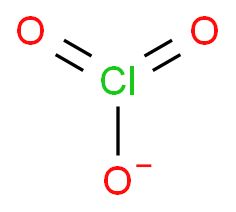
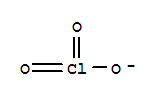
Chlorate Ion (ClO3-) is a simple inorganic compound that plays a crucial role in various chemical processes and applications. It is a polyatomic ion composed of one chlorine atom and three oxygen atoms. The ion is characterized by its high electronegativity and strong oxidizing properties, making it useful in a variety of industries, including the production of explosives, dyes, and pharmaceuticals. Understanding the polarity of chlorate ion can provide insights into its chemical behavior and applications.
Polarity describes the uneven distribution of electrons within a molecule or compound, leading to the formation of positive and negative poles. In the context of chemistry, polarity arises due to the unequal sharing of electrons between atoms, typically caused by differences in electronegativity. When atoms in a bond have significantly different electronegativities, with a difference typically ranging from 0.5 to 2, the shared electrons tend to be pulled closer to the more electronegative atom. This shift in electron density results in one part of the molecule carrying a partial negative charge and the other a partial positive charge, thereby giving the molecule its polar character.
To determine whether chlorate ion (ClO3-) is polar or nonpolar, we can examine it from three key perspectives: molecular geometry, dipole moment, and electronegativity.
Molecular Geometry: The chlorate ion has a trigonal pyramidal geometry due to the presence of a lone pair of electrons on the chlorine atom. This arrangement is a result of the VSEPR (Valence Shell Electron Pair Repulsion) theory, which predicts that electron pairs will arrange themselves to minimize repulsion.

Dipole Moment: Due to the trigonal pyramidal shape of the ion, the dipole moments of the C–O bonds do not cancel out. The asymmetrical distribution of charges leads to a net dipole moment, which contributes to the overall polarity of the ion.
Bond Polarity: The bonds between chlorine (Cl) and oxygen (O) in the chlorate ion are polar covalent bonds. This polarity arises from the difference in electronegativity between chlorine and oxygen, with oxygen being more electronegative. As a result, oxygen atoms acquire a partial negative charge (δ?), while the chlorine atom has a partial positive charge (δ?).

Therefore, chlorate ion (ClO3-) is a nonpolar molecule due to its symmetrical molecular structure and the cancellation of individual bond dipoles. This nonpolar nature influences its chemical behavior and applications, making it suitable for various industrial uses where polarity may not be a critical factor.
Chlorate ion finds applications across multiple fields due to its unique properties:
Explosives: Chlorate salts are used in the production of high explosive compounds, such as nitroglycerin, due to their strong oxidizing properties.
Dyes: Chlorate ions can be used in the synthesis of certain dyes, contributing to their color and stability.
Pharmaceuticals: Chlorate salts are utilized in the formulation of certain drugs, particularly those requiring strong oxidizing agents or stabilizers.
Water Treatment: Chlorate ions play a role in water purification processes, where they can help in the removal of certain contaminants through oxidation reactions.
Fertilizers: Chlorate salts are used as fertilizers, enhancing plant growth and development through their nutrient content.
Analytical Chemistry: Chlorate ions are employed in various analytical techniques for their ability to oxidize organic compounds and serve as indicators in redox reactions.
In conclusion, chlorate ion (ClO3-) is a nonpolar molecule with diverse applications across various industries, primarily due to its strong oxidizing properties and lack of net charge separation. Its unique characteristics enable its utilization in areas such as explosives, dyes, pharmaceuticals, water treatment, fertilizers, and analytical chemistry.
 |
|
 |
 |
|
 |
 EN
EN
 Agricultural News
 Food News
 Industrial News
 Cosmetic News
 Pharmaceutical News
 Science News


