-
We detected your language preference as English. Would you like to switch to the English version for a better experience?
Switch to English
Stay here



Benzoic acid is a common organic acid widely used in industries such as chemical, pharmaceutical, and food. In terms of chemical properties, organic acids can be classified into strong acids and weak acids, depending on their molecular structure and degree of dissociation. The acidity of benzoic acid is one of the focuses of attention. In this article, we will explore the molecular structure, acidity, and applications of benzoic acid in the field of chemistry to answer the question of whether benzoic acid is a strong or weak acid.
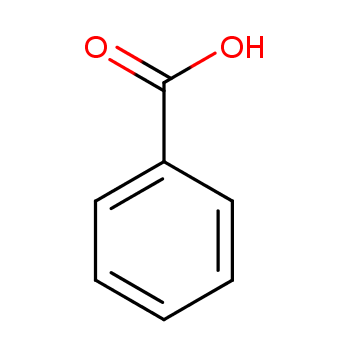
Benzoic acid is a colorless (white) crystalline organic compound with the molecular formula C6H5COOH. It occurs naturally in certain plants and can be synthesized. Benzoic acid is slightly soluble in water but dissolves well in many organic solvents. It has a sweet odor when dissolved in water. Benzoic acid is the simplest aromatic carboxylic acid and has been known since the 16th century. Its most common natural source is gum benzoin, a resin found in the bark of trees in the Styrax genus. Most of the benzoic acid produced today is synthetic. Its first industrial synthesis involved hydrolysis of benzotrichloride to calcium benzoate, followed by acidification. This method has been completely replaced by air oxidation of toluene, avoiding the problem of product contamination by chlorinated by-products. Many processed foods contain benzoic acid or one of its salts as a preservative. The acid inhibits the growth of bacteria, molds, and yeast; its effect is best when the food has an acidic pH. Benzoic acid is also commonly found in topical antifungal preparations.
Esters and salts of benzoic acid are called benzoates. This acid is also used as a preservative in various products such as foods, beverages, and medications. High concentrations of benzoic acid can irritate the eyes, skin, and respiratory tract.

Benzoic acid is classified as a weak acid. Weak acids are those that do not completely ionize or dissociate in water. When a weak acid dissolves in water, only a few molecules release protons (H+) and become ions. The rest of the molecules remain in their original form. On the other hand, strong acids completely ionize or dissociate in water, so almost all molecules release protons and become ions. This results in a higher concentration of ions in the solution. Compared to strong acids, the incomplete dissociation of weak acids leads to a relatively low concentration of hydrogen ions (H3O+).
The strength of an acid is usually determined by its acid dissociation constant (Ka). Strong acids have high Ka values (greater than 10^3), indicating almost complete dissociation in water. In contrast, weak acids have much lower Ka values, typically between 10^-4 and 10^-10. The Ka value is a measure of weak acid strength. Lower Ka values indicate weaker acids with more extensive dissociation. The pKa of benzoic acid is approximately 4.2 at 25°C, indicating that it is a moderately weak acid.
When benzoic acid (C6H5COOH) dissolves in water, it reacts with water molecules (H2O) to release hydrogen ions (H+) and benzoate ions (C6H5COO-).
Unlike strong acids, which almost completely dissociate in water, benzoic acid reaches an equilibrium state where a significant amount of the starting material (C6H5COOH) remains undissociated. This is because the equilibrium favors the reactants, resulting in lower concentrations of free hydrogen ions and lower overall acidity compared to strong acids. Essentially, the limited dissociation of benzoic acid in water and its pKa value within the range of weak acids classify it as a weak acid.
In aqueous solution, benzoic acid can donate a proton to water molecules, forming hydronium ions (H3O+) and benzoate ions (C6H5COO-). The concentration of hydronium ions produced by benzoic acid is slightly low. This also explains why it is considered weak.
Another reason for the weak acidity of benzoic acid is the presence of resonance structures in its molecule. Resonance structures are a representation of molecules where the distribution of electrons is shown in a fundamentally inaccurate way but can help explain specific chemical properties of the molecule.
In the case of benzoic acid, resonance structures allow the negative charge of the carboxyl group to be delocalized over the entire molecule rather than localized in one place. This delocalization of charge makes it more difficult for a proton to be donated by the molecule.
The benzene ring is a stable aromatic ring composed of six carbon atoms with alternating single and double bonds. The aromaticity of the benzene ring makes it slightly unreactive and contributes to the weak acidity of benzoic acid.
Concentration: With an increase in the concentration of benzoic acid, the equilibrium shifts to the right, leading to more benzoic acid dissociation.
Temperature: Higher temperatures typically favor carboxylic acid dissociation, resulting in increased acidity.
Ionic strength: The presence of other ions in the solution affects the dissociation of benzoic acid. This is because these ions can interact with the hydrogen ions and benzoate ions, affecting their ability to solvate in water.
Benzoic acid is stronger than acrylic acid because the double bond in benzoic acid provides more electron density, making it a stronger acid than acrylic acid.
Benzoic acid itself is a stronger acid than acetic acid. The carboxyl group of benzoic acid is attached to an sp2-hybridized carbon, which is more electronegative and electron-withdrawing than the sp3-hybridized carbon attached to the carboxyl group of acetic acid. Acetic acid is also stronger than formic acid.
The negative charge on the benzoate ion (C6H5COO-), formed when benzoic acid donates a proton, can delocalize across the benzene ring. This delocalization spreads the charge over a larger area, making the ion more stable. The acetate ion (CH3COO-), from acetic acid, does not have this resonance stabilization, making it less stable and favoring the undissociated acid form.
These factors combined make benzoic acid more willing to donate a proton, and therefore stronger than acetic acid.
Electrolytes are substances that dissociate into ions in solution. Strong electrolytes completely dissociate, while weak electrolytes only partially dissociate. So, is benzoic acid a strong electrolyte?
Benzoic acid is a weak electrolyte. It is an organic acid that can donate a proton (H+) to water molecules, forming hydronium ions (H3O+) and benzoate ions (C6H5COO-). However, this dissociation is not complete. There is an equilibrium between undissociated benzoic acid molecules and ions. This means that a significant portion of benzoic acid remains in its molecular form, making it a weak electrolyte.
Benzoic acid is a weak acid. Although its acidity is relatively weak, its widespread applications in industries such as chemical, pharmaceutical, and food industries demonstrate its importance and value. Understanding the acidic nature of benzoic acid not only helps us handle and use this compound correctly in the laboratory but also enhances our understanding of the characteristics and reaction mechanisms of organic acids. Through this introduction, readers should have gained a clearer understanding of the acidity of benzoic acid and be able to apply this knowledge more accurately in chemical experiments and industrial production.
[1]https://www.pearson.com/channels/gob/exam-prep/asset/37ce4814
[2]https://bisleyinternational.com/is-benzoic-acid-a-strong-or-weak-acid/
[3]https://chem.libretexts.org/Bookshelves/Organic_Chemistry/Organic_Chemistry_(Morsch_et_al.)/20%3A_Carboxylic_Acids_and_Nitriles/
[4]https://scienceinfo.com/acidic-strength-of-carboxylic-acids/
[5]https://www.acs.org/molecule-of-the-week/archive/b/benzoic-acid.html
[6]https://www.vedantu.com/chemistry/benzoic-acid
 |
 |
 |
 EN
EN
 Agricultural News
 Food News
 Industrial News
 Cosmetic News
 Pharmaceutical News
 Science News

 2YRS
2YRS

