-
We detected your language preference as English. Would you like to switch to the English version for a better experience?
Switch to English
Stay here




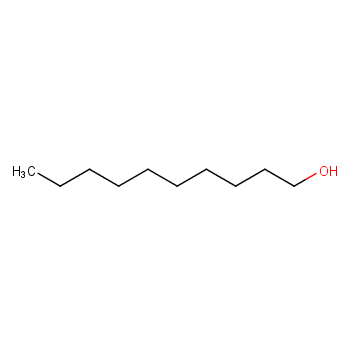
1-Decanol (C10H22O) is an organic compound consisting of a ten-carbon chain with a hydroxyl (-OH) group attached to one end. This structure categorizes 1-decanol as a fatty alcohol, often used in industrial applications such as solvents, lubricants, and surfactants. The molecule exhibits unique physical and chemical properties that arise from its structure. In particular, the long nonpolar carbon chain of 1-decanol makes it generally insoluble in water, but readily soluble in nonpolar solvents like hexane. How does the molecular structure of 1-decanol affect its polarity and solubility characteristics?
Polarity describes the unequal distribution of electrons within a molecule, creating distinct positive and negative poles. This occurs when there is a significant difference in electronegativity between atoms in a bond, with a range typically between 0.5 and 2, leading electrons to shift toward the more electronegative atom. This shift results in partial charges, giving the molecule its polar character.
Polar molecules, such as water, often dissolve well in other polar substances and exhibit distinctive chemical behaviors, such as elevated boiling points and unique interactions in biological systems. Polarity is therefore a central factor in determining the solubility and reactivity of many compounds. Is 1 decanol polar or nonpolar?
Is 1 decanol polar or nonpolar? To determine whether 1-decanol is polar or nonpolar, we can examine it through molecular structure, dipole moment, and electronegativity differences.
Molecular Structure: 1-Decanol consists of a long carbon chain with a hydroxyl (-OH) group at one end. The nonpolar nature of the C-H and C-C bonds within the carbon chain dominates the molecule's overall character, making 1-decanol largely nonpolar despite the polar -OH group.

Dipole Moment: The hydroxyl group contributes some polarity to 1-decanol. However, the large nonpolar carbon chain significantly reduces the impact of this dipole moment, resulting in an overall nonpolar behavior. This configuration explains why 1-decanol is insoluble in water but soluble in nonpolar solvents like hexane.
Electronegativity: The oxygen atom in the hydroxyl group is more electronegative than both carbon and hydrogen, causing a local dipole within the -OH group. However, the overall molecule’s nonpolar nature prevails due to the lengthy hydrocarbon chain.
| Element Electronegativity | |
| O | 3.44 |
| H | 2.20 |
| C | 2.55 |

Overall, 1-decanol is considered nonpolar. Its long carbon chain overrides the polar effect of the hydroxyl group, resulting in its insolubility in water and solubility in nonpolar solvents like hexane.
| 1-Decanol Cas 112-30-1 | |
| Molecular formula | C10H22O |
| Molecular shape | Linear chain |
| Relative molecular mass | 158.28 g/mol |
| Solubility | soluble in organic solvents |
| Melting point | 6.4 °C |
| Boiling point | 231.1 °C |
| Compound | Polarity | Applications |
| Ethanol (C2H5OH) | Highly polar due to the hydroxyl group and short carbon chain, allowing for full miscibility with water. | Used in alcoholic beverages, as a solvent, in hand sanitizers, and in fuel. |
After exploring the polarity chemistry of C10H22O, have you gained a deeper understanding of whether it is "polar or nonpolar"? While C10H22O as a molecule is nonpolar, this does not necessarily mean that all of its bonds are nonpolar bonds. If you're interested in similar compounds or related supply chain resources, Guidechem offers a comprehensive list of global 1-decanol?suppliers, where you can find the right procurement plan to meet your research and production needs.
|
 |
 |
 |
|
 EN
EN
 Agricultural News
 Food News
 Industrial News
 Cosmetic News
 Pharmaceutical News
 Science News

 2YRS
2YRS

