-
We detected your language preference as English. Would you like to switch to the English version for a better experience?
Switch to English
Stay here



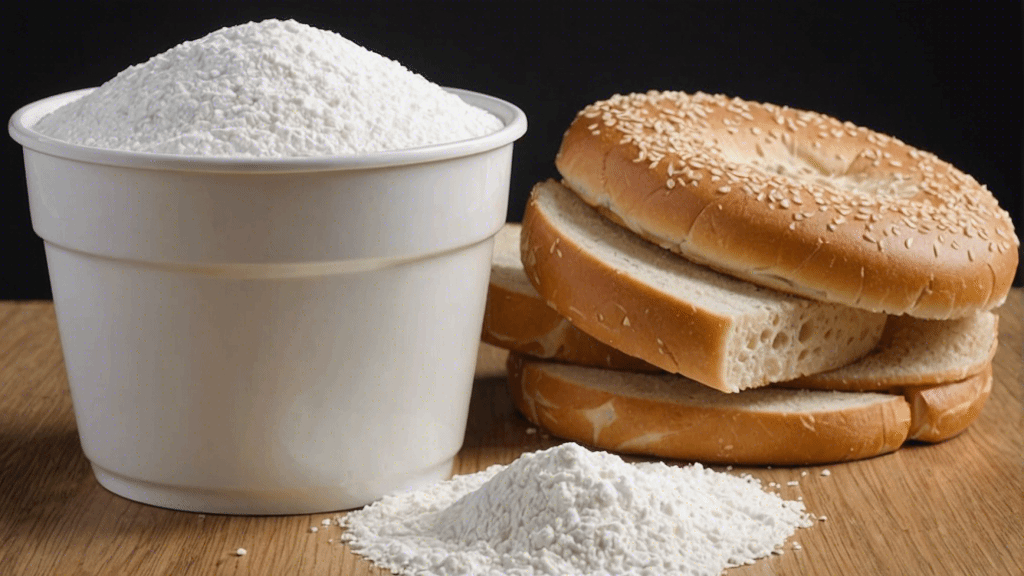
Methyl cellulose, a water-soluble derivative of cellulose, is widely used in the food industry to enhance the taste, texture, and stability of various food products. It is derived from natural plant fibers and undergoes specific processing to obtain its desired properties. In this article, we will explore the characteristics, uses, and applications of methyl cellulose, gaining a deeper understanding of this common food additive.
Methyl cellulose is derived from natural cellulose and appears as a white to off-white powder. It is odorless and has multiple functions such as film-forming, emulsifying, adhesive, and thickening properties, making it widely used in baked goods, fried foods, desserts, candies, soups, and more.

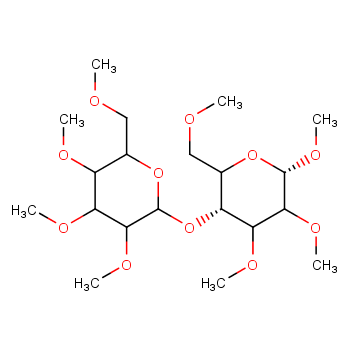
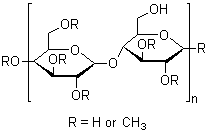
Methyl cellulose is the methyl ether of cellulose, produced by reacting alkali cellulose with chloromethane. It contains 27.58%–31.5% methoxy groups. Compared to HPC, MC has a lower degree of substitution of polymer weight. MC is listed in USP/NF, pH.Eur., JP, and FCC. It is extensively used in oral solid dosage forms as a binder, coating agent, and controlled-release matrix. MC is soluble in water (up to 55°C), indicating slightly higher water solubility than HPC. Its aqueous solutions exhibit thermo-gelling properties at high temperatures. MC's aqueous-alcoholic solutions can be prepared using polar organic solvents such as ethanol, methanol, isopropanol, with a small amount of water (10%v/v) added as a co-solvent.
MC comes in various molecular weight (MW) grades, but only low MW grades with a nominal viscosity of 15 cps (2% w/v concentration) are used as tablet binders. Although MC can be added as a dry powder or solution, it is generally more effective when pre-dissolved and added as a solution. Low molecular weight MC is a multifunctional binder with good plasticity and wetting properties. It produces compressible granules and tablets of medium hardness. MC's aqueous solutions can be prepared similarly to HPC.
The density of methyl cellulose is 1.01 g/cm3 (70°C). However, the density of methyl cellulose is not a single fixed value. It depends on two key factors:
The variation in the density of methyl cellulose plays a crucial role in its different applications:
Methyl cellulose has several different applications, so how you use it depends on what you're using it for. Here are two common applications:
Regardless of how you use methyl cellulose, be sure to wear gloves and avoid inhaling dust when handling it in powder form. Methyl cellulose is generally safe, but it's a good idea to consult a medical professional before using it in any way that involves ingestion.
The CAS number of methyl cellulose is 9004-67-5.
The CAS number is a unique identifier for chemicals that aids in identification and safety. With a CAS number, you can:
Methyl cellulose is a versatile ingredient with a wide range of applications in different industries. Here are its various uses:
Methyl cellulose is a common additive in cement and mortar mixes. It improves workability by making the mixture easier to spread and shape. It also enhances water retention, preventing the mixture from drying too quickly, and improves adhesion to surfaces.
What is the use of methyl cellulose in pharmaceuticals?
Methyl cellulose is not naturally occurring but produced through a chemical process. Here's a breakdown of two key steps:
(1) Extraction of Plant Cellulose
The starting point for methyl cellulose is plant cellulose, typically obtained from wood pulp or cotton. The pulping process separates cellulose from other materials like lignin, which binds plant cells together. This purification process yields cellulose.
(2) Chemical Modification and Manufacturing
The extracted cellulose undergoes treatment with strong alkali, such as sodium hydroxide (NaOH), also known as caustic soda. This breaks down the long cellulose chains into shorter, more manageable cellulose chains.
The resulting product, called alkali cellulose, then reacts with methyl chloride (CH3Cl) in a process known as etherification. This reaction substitutes some hydroxyl groups (OH groups) on the cellulose backbone with methoxy groups (OCH3 groups), essentially attaching methyl groups to the cellulose skeleton.
The final product, methyl cellulose, is then purified, dried, and ground into powder or granular form for various applications.
By controlling reaction conditions, chemists can produce methyl cellulose with different properties. Degree of substitution (DS) refers to the average number of hydroxyl groups substituted with methoxy groups per glucose unit in the cellulose molecule. Compared to methyl cellulose with lower DS, methyl cellulose with higher DS typically exhibits different thickening and gelling properties.
Methyl cellulose is a water-soluble polymer compound derived from cellulose through partial etherification, possessing unique properties and a wide range of applications. Its excellent properties make it an indispensable additive in many industries including food, pharmaceuticals, cosmetics, textiles, printing, petroleum, and construction. Methyl cellulose's characteristics play important roles in various applications. Its hydrophilicity allows it to dissolve in water and form viscous solutions, making it an ideal choice for thickeners, emulsifiers, suspending agents, and stabilizers. The uses and applications of methyl cellulose continue to expand. With the development of new technologies and further understanding of methyl cellulose properties, we can expect to see more innovative applications in the future.
[1] Hao L, Li Y, Gong P, et al. Material, process and business development for 3D chocolate printing[M]//Fundamentals of 3D food printing and applications. Academic Press, 2019: 207-255.
[2] https://www.sciencedirect.com/topics/agricultural-and-biological-sciences/methyl-cellulose
[3] https://www.sciencedirect.com/topics/medicine-and-dentistry/methyl-cellulose
[4] https://en.wikipedia.org/wiki/Methyl_cellulose
 |
 |
 |
 |
 |
 |
 EN
EN
 Agricultural News
 Food News
 Industrial News
 Cosmetic News
 Pharmaceutical News
 Science News

 13YRS
13YRS

