-
We detected your language preference as English. Would you like to switch to the English version for a better experience?
Switch to English
Stay here




Adenosine triphosphate (ATP) holds significant importance as a fundamental biological compound due to its pivotal role in providing energy for various life processes. All living organisms necessitate energy to execute essential biological functions such as photosynthesis, muscle contraction, digestion, and biosynthesis. Functioning as the universal energy carrier for all organisms, ATP is commonly referred to as the "energy currency" of cells. The understanding of ATP's universal role was notably established by Fritz Lipmann (1899–1986), who, along with Hans Adolf Krebs (1900–1981), shared the 1953 Nobel Prize in Physiology or Medicine for their contributions.
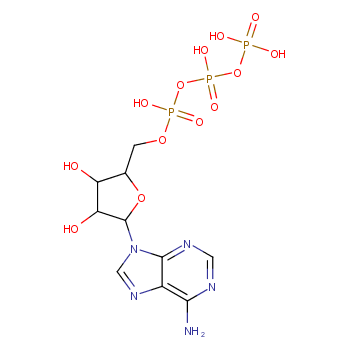
During cellular respiration, diverse compounds, including carbohydrates, fats, and sugars, undergo continuous conversion into ATP within cells. ATP, in turn, is utilized in various cellular compartments to supply energy. Furthermore, ATP serves as a neurotransmitter stored and secreted with other neurotransmitters from the pancreas. Structurally, ATP is a nucleotide composed of the nucleoside adenosine with three attached phosphate groups. The high-energy bonds uniting the phosphates in ATP are crucial for energy production in cells.
Karl Lohmann (1898–1978) first isolated ATP from muscle tissue extracts in 1929, and Alexander Todd (1907–1997) synthesized ATP in 1948, for which he received the 1957 Nobel Prize in Chemistry. The conversion of ATP to adenosine diphosphate (ADP) during hydrolysis releases energy, making ATP the principal mechanism for energy supply in biological processes.
ATP synthesis in organisms involves oxidative phosphorylation, the primary process employed by aerobic organisms to produce ATP. This process occurs in the mitochondria, where nicotinamide adenine dinucleotide (NADH) is oxidized, generating a proton gradient and ultimately resulting in ATP synthesis. Glycolysis is another ATP-generating process that converts glucose into pyruvate, producing ATP and NADH. The Krebs cycle further contributes to ATP production.
In aerobic organisms, oxidative phosphorylation, glycolysis, and the Krebs cycle collectively yield ATP, with oxidative phosphorylation being the most significant contributor. In anaerobic organisms and prokaryotes, different mechanisms lead to ATP production. Green plants produce ATP in chloroplasts through a process similar to oxidative phosphorylation, termed photophosphorylation, where sunlight generates the required proton gradient. The intricate enzymatic mechanism underlying ATP production has been elucidated in recent decades, leading to the recognition of Paul D. Boyer (1918–), John E. Walker (1941–), and Jens C. Skou (1918–), who shared the 1997 Nobel Prize in Chemistry for their contributions.
Richard L. Myers (2009). The 100 Most Important Chemical Compounds: A Reference Guide. Greenwood Publishing Group. October 1, 2009. https://doi.org/10.1021/ed086p1182
 |
|
 |
 |
 |
 EN
EN
 Agricultural News
 Food News
 Industrial News
 Cosmetic News
 Pharmaceutical News
 Science News

 3YRS
3YRS


