-
We detected your language preference as English. Would you like to switch to the English version for a better experience?
Switch to English
Stay here




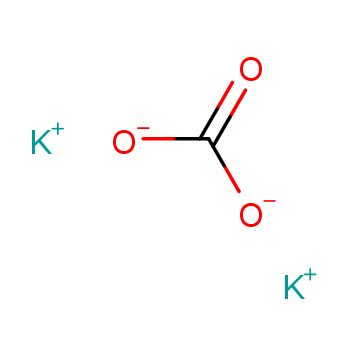
Potassium carbonate, a white crystalline salt, forms basic aqueous solutions crucial in the production of various industrial goods, including fertilizer, glass, ceramics, explosives, soaps, chemicals, and wool treatments. Historically referred to as potash, potassium carbonate is now part of several potassium salts under the broader term. In the fertilizer industry, "potash" specifically denotes potassium oxide (K2O), not potassium carbonate. Pearlash, a purer form of potash, is obtained by heating potash to eliminate impurities. The term "potash" originates from the traditional method of potassium carbonate production, dating back to ancient times. The process involved burning wood or plant material, leaching ashes in a wooden barrel covered with straw, and subsequently evaporating or boiling away the water in clay or iron pots to recover potassium and sodium alkalis.
Potash, a valuable commodity historically used in glassmaking, soap production, dyeing, and gunpowder, has evolved. Pearlash, employed as a leavening agent before the adoption of sodium bicarbonate, was part of this transformation. Initially sourced from Russia and Sweden forests, European potash supply shifted to North American colonists in the mid-1700s due to depleted European forests and growing knowledge of potash production. The vast North American forests provided the necessary wood for potash production. In colonial times, England utilized significant quantities of potash for various purposes, particularly wool scouring, a process involving the cleaning of wool to eliminate dirt, grease, and contaminants. By the mid-18th century, England's annual potash consumption reached several thousand tons. As American colonists expanded westward, clearing land for farming became a lucrative source of income by burning wood and stump to produce potash. An acre of land could yield up to 100 bushels of ashes valued at approximately $5, resulting in potash distributors making $75 from a 500-pound barrel of potash. Hardwoods such as elm, ash, sugar maple, hickory, beech, and basswood were particularly prized for their high-grade potash content. By the late 18th century, North America's coastal region was largely settled, and forests were depleting. Efforts were made to enhance potash production, notably with the first-ever U.S. patent granted in 1790 to Samuel Hopkins of Philadelphia, credited for a novel apparatus and process for making potash and pearl ash. Hopkins' method involved a redesigned furnace and recycling residues after leaching raw ashes to increase potash yield. Licensing his process required a $50 initial payment and an additional $150 over five years or an alternative arrangement of 50 pounds of potash upfront and 150 pounds due over the next five years.
In the first half of the 19th century, the United States played a pivotal role as a primary global supplier of potash. However, a shift occurred in 1851 with the discovery of soluble potassium salt deposits near Stassburg in northern Germany, leading to the commencement of production in 1861. These Stassburg deposits emerged as the predominant source of global potash, characterized by a combination of potassium salts, primarily potassium chloride (KCl) and potassium sulfate (K2SO4), as opposed to potassium carbonate. Simultaneously, the advent of industrial processes facilitating the cost-effective production of soda ash (Na2CO3) introduced an alternative to potash in various applications, marking the conclusion of the traditional wood ash-based potash production method.
The late 19th century witnessed a transformative development with the establishment of modern potassium carbonate production methods, notably through electrolytic chemical processes. This involved electrolytically converting a potassium chloride (KCl) solution into potassium hydroxide (KOH), chlorine gas (Cl2), and hydrogen gas (H2). The subsequent reaction of potassium hydroxide with carbon dioxide produced sodium carbonate: 2KOH(aq) + CO2(g) → K2CO3(aq) + H2O(l).
Presently, potassium carbonate remains integral in numerous applications, primarily in the production of specialty glasses and ceramics. Its usage spans optical glass, glass for video screens in electronic devices, and laboratory glassware. The preference for potassium carbonate over sodium carbonate in certain glasses is attributed to its superior compatibility with lead, barium, and strontium oxides, reducing the glass's melting point and yielding a softer product. With a higher refractive index, potassium carbonate contributes to the production of more brilliant glass, characterized by enhanced electrical resistivity and resilience to temperature fluctuations.
Beyond glass and ceramics, potassium carbonate finds applications in agriculture and food production. Agriculturally, it serves as a drying agent for crops like alfalfa hay and legumes, modifying the waxy cuticle layer to enhance water permeability. In viticulture and orchards, its water solubility and alkaline properties prove beneficial for supplying potassium to acidic soils. The chemical industry relies on potassium carbonate as a source of inorganic potassium salts, used in fertilizers, soaps, adhesives, dehydrating agents, dyes, and pharmaceuticals. It contributes to the production of soft soaps when used to make potassium lye, and it finds diverse applications, including fire suppression, CO2 absorption in chemical processes, pollution control, as an antioxidant in rubber additives, and in pharmaceutical formulations.
Richard L. Myers (2009). The 100 Most Important Chemical Compounds: A Reference Guide. Greenwood Publishing Group. October 1, 2009. https://doi.org/10.1021/ed086p1182
 |
|
 |
 |
 |
 EN
EN
 Agricultural News
 Food News
 Industrial News
 Cosmetic News
 Pharmaceutical News
 Science News

 2YRS
2YRS

