-
We detected your language preference as English. Would you like to switch to the English version for a better experience?
Switch to English
Stay here



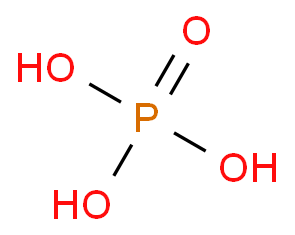
Orthophosphoric acid, commonly known as pure phosphoric acid, represents a transparent, colorless mineral acid of moderate strength. Its typical form for commercial purposes is an aqueous solution containing 75–85%, presenting as a clear, viscous liquid. Despite the conventional designation as H3PO4, phosphoric acids encompass various acids resulting from the formation of phosphoric acid. The application of heat to phosphoric acid triggers the synthesis of polyphosphoric acids through condensation reactions, wherein two or more H3PO4 molecules combine, eliminating water. Pyrophosphoric acid (H4P2O7), also termed diphosphoric acid, serves as an illustration, generated by heating phosphoric acid to approximately 225°C.
Tripolyphosphoric acid (H5P3O10) and tetrapolyphosphoric acid (H6P4O13) can be produced in a comparable manner. Further heating and dehydration processes yield metaphosphoric acid (HPO3) and phosphoric anhydride (P4O10). Metaphosphoric acid, considered a phosphoric acid molecule minus a water molecule, undergoes combination to produce cyclic metaphosphoric acids. Phosphorus anhydride, expressed as P2O5 (diphosphorus pentoxide) or superphosphoric acid, is the basis for rating the phosphorus content in fertilizers, and the industrial superphosphoric acid comprises a blend of superphosphoric acid and polyphosphoric acids.
The ionization of phosphoric acid, alongside its different forms, leads to the formation of corresponding phosphates. Upon losing three hydrogen ions, phosphoric acid transforms into the phosphate or orthophosphate ion (PO43?). Similarly, the polyphosphoric acids, upon losing hydrogen ions, yield the corresponding polyphosphate ions. For instance, pyrophosphoric acid loses four hydrogen ions, forming the pyrophosphate ion (P2O74?), while metaphosphate ion (PO3?) arises from the ionization of metaphosphoric acid. The phosphoric acids can undergo partial ionization, generating intermediate ions.

Phosphoric acid's historical presence dates back to ancient alchemists, though its identification occurred later. The nomenclature originates from the element phosphorus, discovered in 1669 by Henning Brand (1630–1710). Brand's innovative method involved vaporizing concentrated urine in the absence of oxygen, leading to the condensation of vapors and the production of a luminous white waxy powder. The term "phosphorus" itself stems from the Latinized Greek words "fos" for light and "phéro" for carry, translating to "to carry light." The discovery of calcium phosphate (Ca3(PO4)2) in bone ash in 1769 by Karl Wilhelm Scheele (1742–1786) and Johann Gahn (1745–1718) marked a significant step, eventually replacing urine with bone as the primary source of phosphorus. Scheele's methodology facilitated the isolation of phosphorus from bone ash and the production of phosphoric acid through the reaction of phosphorus and nitric acid.
In the early 19th century, the agricultural significance of fertilizers gained scientific validation, leading to bones becoming the primary source of phosphorus for soil nutrients. However, the efficacy of bone meal, largely composed of Ca3(PO4)2, in enriching soil phosphorus content was limited due to its low solubility in water. Phosphates tended to precipitate with calcium and other divalent and trivalent ions. John Bennett Lawes (1814–1900) patented a process in 1841 to produce superphosphate from bones, later extending it to phosphates from rock. Superphosphates, formed by treating Ca3(PO4)2 with sulfuric acid, consist of more soluble calcium hydrogen phosphates, notably Ca(H2PO4)2, also known as superphosphate. The enhanced solubility of calcium hydrogen phosphates makes them more readily available to plants.
Building on Lawes' work, the commercial fertilizer industry emerged in the mid-19th century. The production of phosphate fertilizer involves the conversion of phosphate rock into phosphoric acid, further processed into phosphate salts. The wet process, comprising the reaction of dried crushed phosphate rock with concentrated sulfuric acid, dominates world production. The resulting phosphoric acid and gypsum are separated, and a portion of the acid is recycled to increase P2O5 concentration. Purification of the phosphoric acid involves using organics, resulting in a final product with a phosphorus content typically between 30% and 40%.
The thermal process produces highly pure H3PO4, suitable for pharmaceuticals, high-grade chemicals, and the food and beverage industry. In this process, phosphate rock undergoes smelting with silica and coke, producing elemental phosphorus that is then combusted to yield P2O5. The P2O5 is hydrated with dilute phosphoric acid, resulting in a concentrated phosphorus solution with an approximate P2O5 content of 85%. Phosphoric acid, the second most widely used industrial acid after sulfuric acid, is a key component in various applications globally.
Phosphoric acid's industrial importance extends beyond fertilizers, finding applications in animal feed supplements, water treatment chemicals, metal surface treatments, etching agents, and personal care products. It serves as a catalyst in the petroleum and polymer industry, while in the food industry, it acts as a preservative, acidulant, and flavor enhancer. Additionally, phosphoric acid is utilized in rust removal, metal cleaning, glass production for opacity control, textile dyeing, rubber latex coagulation, dental cements, and various other applications.
Richard L. Myers (2009). The 100 Most Important Chemical Compounds: A Reference Guide. Greenwood Publishing Group. October 1, 2009. https://doi.org/10.1021/ed086p1182
 |
 |
 |
 |
 |
 |
 EN
EN
 Agricultural News
 Food News
 Industrial News
 Cosmetic News
 Pharmaceutical News
 Science News

 1YR
1YR

