-
We detected your language preference as English. Would you like to switch to the English version for a better experience?
Switch to English
Stay here




Sodium Hyaluronate, with the chemical formula C14H21NaO11 and CAS number 9067-32-7, is the sodium salt of hyaluronic acid, commonly used in medical and cosmetic applications due to its ability to retain moisture and improve skin hydration. It is widely used in skincare products and injectable dermal fillers.
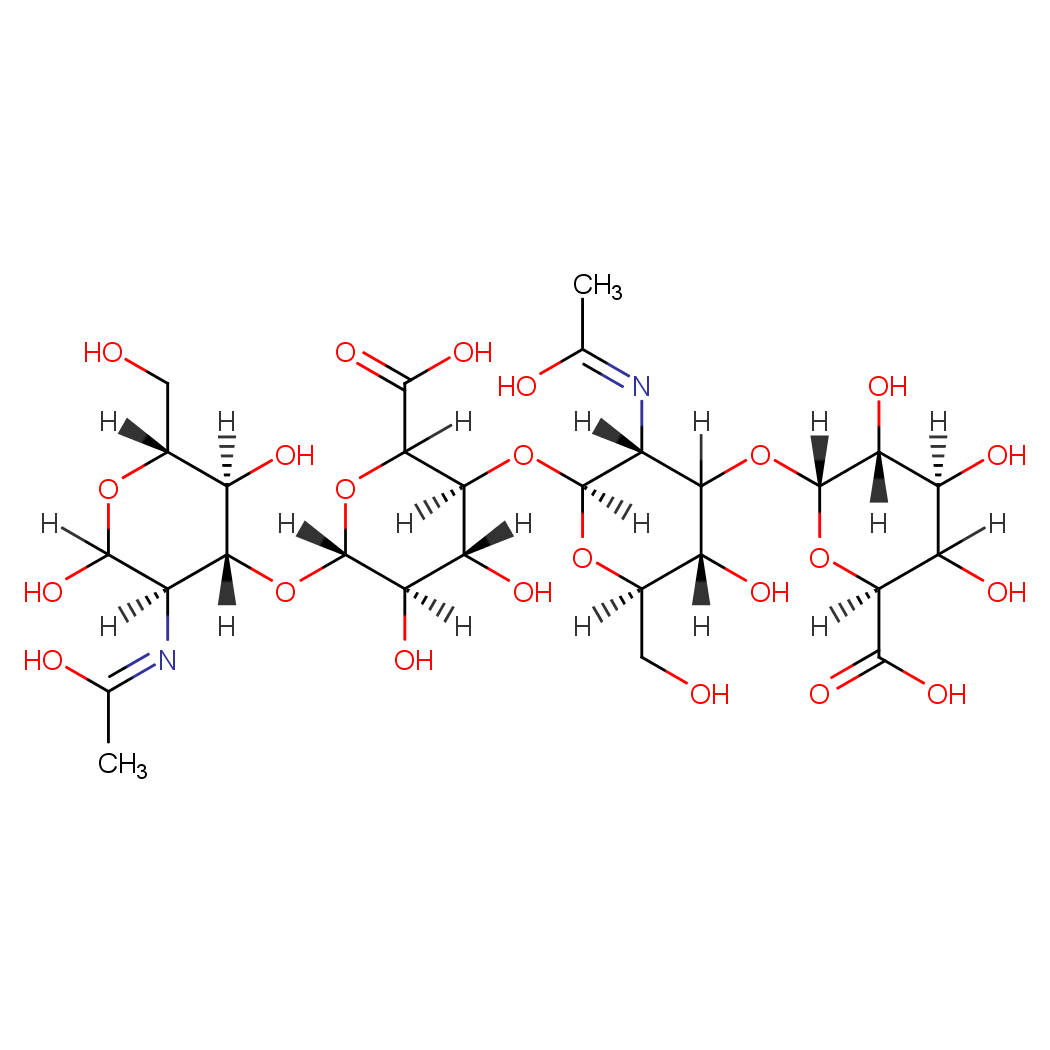
Hyaluronic Acid, with the chemical formula C14H21NO11 and CAS number 9004-61-9, is a naturally occurring biopolymer in the human body, playing a crucial role in skin hydration, wound healing, and joint lubrication. Its applications extend from skincare to medical treatments, often used for its moisture-retaining properties.
Sodium Hyaluronate and Hyaluronic Acid are closely related compounds, with Sodium Hyaluronate being the sodium salt form of Hyaluronic Acid. While both have similar biological functions, Sodium Hyaluronate is more commonly used in topical and injectable products due to its enhanced stability and ability to penetrate the skin more effectively. On the other hand, Hyaluronic Acid is often utilized in its natural form for therapeutic and cosmetic purposes.


Both compounds are derived from similar bacterial fermentation processes, but Sodium Hyaluronate undergoes an additional step of neutralization with sodium ions, which enhances its stability and solubility, making it suitable for cosmetic and injectable formulations.
Sodium Hyaluronate and Hyaluronic Acid are both highly effective in various applications, ranging from skincare and cosmetics to medical uses. The primary difference between the two is their formulation, which influences their effectiveness and absorption rate in different applications.

Sodium Hyaluronate is widely used in skincare products, especially in moisturizers, serums, and anti-aging creams. Its small molecular size allows it to penetrate deeper into the skin, providing long-lasting hydration. This makes it an excellent choice for treating dry skin, reducing wrinkles, and enhancing skin elasticity. Sodium Hyaluronate is often found in dermal fillers, as its ability to retain moisture helps to plump the skin and reduce the appearance of fine lines and wrinkles. It is also commonly used in ophthalmic surgeries to maintain moisture in the eyes during procedures.
Moreover, Sodium Hyaluronate is effective in promoting wound healing by maintaining moisture in the skin, which accelerates the regeneration of damaged tissue. It is also used in various medical treatments, including intra-articular injections for osteoarthritis to lubricate the joints and reduce inflammation.
Hyaluronic Acid, being the naturally occurring form of the compound, is integral in many therapeutic and medical treatments. In the medical field, Hyaluronic Acid is injected into the joints to treat osteoarthritis and other degenerative joint conditions. Its ability to retain water and lubricate the joints provides significant relief from pain and stiffness, and it has been shown to improve mobility in patients suffering from these conditions. This makes Hyaluronic Acid an important tool in non-surgical joint management.
In wound healing, Hyaluronic Acid aids in tissue repair by attracting water molecules to the site of injury, promoting faster healing and reducing scar formation. It is often included in creams and ointments for burns, cuts, and other skin wounds due to its ability to speed up the regeneration of damaged tissue. Hyaluronic Acid helps improve the integrity and appearance of skin after healing, making it a vital ingredient in dermatology for both cosmetic and medical purposes.
In skincare, Hyaluronic Acid is often used in serums, creams, and masks due to its hydrating properties. While its larger molecular size compared to Sodium Hyaluronate means it works more on the surface of the skin, it still effectively draws moisture to the skin, leaving it plump and hydrated. This makes Hyaluronic Acid particularly popular for dry and aging skin, where moisture retention is key to maintaining skin elasticity and appearance.

In conclusion, Sodium Hyaluronate and Hyaluronic Acid offer distinct applications, each contributing significantly to skincare and medical treatments. Sodium Hyaluronate's smaller molecular size allows for deeper skin penetration and enhanced hydration, making it ideal for moisturizers, anti-aging products, and injectable dermal fillers. Hyaluronic Acid, on the other hand, is highly effective for joint lubrication, wound healing, and general skin hydration, making it a versatile compound in both medical and cosmetic fields.
| Side Effect |
Sodium Hyaluronate |
Hyaluronic Acid |
|---|---|---|
| Skin Irritation | Rare, can cause mild irritation or redness in sensitive individuals | Rare, can cause mild irritation or redness in sensitive individuals |
| Allergic Reactions | Rare, can cause rash, itching, or swelling | Rare, can cause rash, itching, or difficulty breathing |
| Joint Inflammation | Rare, can cause mild inflammation when injected into joints | Unlikely, but can cause discomfort in certain cases |
| Dehydration | Unlikely, does not cause dehydration | Unlikely, does not cause dehydration |
If you're looking to purchase these compounds, Guidechem is your go-to platform for sourcing high-quality raw materials and reliable suppliers. With our extensive global network, we connect you to a wide range of Sodium Hyaluronate suppliers and Hyaluronic Acid suppliers, ensuring you find the right products to meet your specific research or production requirements. Whether you're in pharmaceuticals, food additives, or other industries, Guidechem simplifies the sourcing process, offering verified supplier information, competitive pricing, and seamless communication.
[1]Sodium Hyaluronate: Uses and Benefits by A. J. Williams.
[2]Hyaluronic Acid in Dermatology and Ophthalmology by B. C. Johnson.
[3]Applications of Sodium Hyaluronate in Joint Health in Journal of Medical Research.
[4]Comparative Study of Hyaluronic Acid and Sodium Hyaluronate in Cosmetic Surgery Journal.
|
 |
 |
 |
 EN
EN
 Agricultural News
 Food News
 Industrial News
 Cosmetic News
 Pharmaceutical News
 Science News

 2YRS
2YRS

